Archive for the ‘Ripped From the Headlines’ category

Roller coaster Monday

August 10, 2009

As I type, 24 people are trapped on the Invertigo roller coaster at California’s Great America, a theme park in Santa Clara.

Let’s see…

Suspended four stories off the ground…

On a roller coaster…

With no foot supports…

Or protection from the blazing sun…

On a 100-degree day in August.

This sounds like a dreadful way to begin one’s week.

I’m reminded of a similar incident here several years ago, when a bunch of tourists were stalled on a coaster at what was then Marine World (it’s now called Six Flags Discovery Kingdom) in Vallejo. In that circumstance, the coaster was a corkscrew model, and several of the passengers were trapped in upside-down or sideways positions.

Not that this will be any comfort to the guests-slash-victims at Great America.

I drive past Great America every Tuesday night on my way home from chorus rehearsal. If these poor people are still hanging there when I cruise by tomorrow, I’ll report back.

Life is not a John Hughes movie

August 6, 2009

I just saw the bulletin that movie maven John Hughes died today, of an apparent heart attack.

How great a loss this news is to the cinematic community depends somewhat on your tastes. It also depends, to a certain degree, on your age, as Hughes — one of Hollywood’s most active and popular producer/directors throughout the 1980s — helmed his last film in 1991. Hughes retired to his native Upper Midwest in the ’90s, and has been entirely absent from the entertainment scene for the past decade.

But when the man was working, he was money in the bank.

I first discovered Hughes long before he got into the movie business, when he was a staff writer and editor for National Lampoon magazine in the 1970s. Hughes was my favorite Lampoon scribe, contributing infinite belly-laughs to those halcyon times when I sported considerably less belly. I still have, buried in a filing cabinet somewhere, a copy of the Sunday newspaper parody that he and PJ O’Rourke cowrote in 1978. It was one of the funniest things my adolescent brain had ever read at the time. I’ll have to dig it out and see whether the sophomoric humor holds up.

Hughes soon segued from publishing to film, scripting the comedy hits Mr. Mom and National Lampoon‘s Vacation in 1983. The following year, he made his directorial debut with the movie that made Molly Ringwald a superstar: Sixteen Candles. For the next several years, Hughes could do no wrong — he wrote and directed such classics as The Breakfast Club, Weird Science, Ferris Bueller’s Day Off (my personal favorite), Planes, Trains & Automobiles, and Uncle Buck.

When Hughes wasn’t directing his own scripts, he was penning screenplays to be lensed by his army of protégés — Pretty in Pink (directed by Howard Deutsch), Some Kind of Wonderful (Deutsch again), National Lampoon‘s Christmas Vacation (Jeremiah Chechik), Home Alone (Chris Columbus) and its two theatrical sequels (Columbus redux, then Raja Gosnell), Career Opportunities (Bryan Gordon), Beethoven (Brian Levant), Dennis the Menace (Nick Castle), and the live-action remakes of 101 Dalmatians (Stephen Herek) and Flubber (Les Mayfield).

If you added up the combined box office from all of the above flicks, you could pretty much erase the national deficit.

The critics didn’t always embrace Hughes’s works, especially in his latter period from Home Alone forward. (In fairness to those critics, they were right about the stuff Hughes churned out during the 1990s.) His name became synonymous with teen angst, the Brat Pack, and mawkish sentimentality. For abut 15 years, though, the public devoured almost everything on which the Hughes name (and his nom de plume Edmond Dantes) appeared.

I never knew why Hughes left the business in the late ’90s. I don’t know whether he lost creative focus, got tired of the ridicule from film snobs, or just decided to take his mega-millions and go home. But when one’s name becomes the brand for an entire genre of cinema — if you say “John Hughes film” to anyone who knows movies, they know exactly what you mean — he or she has accomplished something. Like it or not, Hughes’s legacy is more than secure.

In memoriam, we present Uncle Swan’s Top Seven John Hughes Films, in ascending order of greatness.

7. Nate and Hayes. The third Hughes screenplay produced in 1983, and the only one to bomb at the box office, it’s Hughes’s most atypical effort — a pirate movie starring Tommy Lee Jones. It’s largely forgotten today, but if you enjoy Disney’s Pirates of the Caribbean trilogy, it’s well worth seeking out. Directed by the otherwise obscure Ferdinand Fairfax.

6. Weird Science. Best remembered for its bombshell starring turn by Kelly LeBrock (the future Mrs. Steven Seagal) and its quirky theme song by Oingo Boingo, this bizarre fantasy also features solid work by young actors Anthony Michael Hall — a Hughes staple — and Ilan Mitchell-Smith. Any movie in which Bill Paxton turns into a humongous pile of excrement — literally! — is worth seeing once.

5.The Breakfast Club. The quintessential Brat Pack flick. The acting is worse than you remember — Emilio Estevez, Molly Ringwald, and Ally Sheedy are dreadful here, and Judd Nelson is… well… Judd Nelson. But the screenplay, while overwrought, is effective, and the lesser roles are excellently performed (especially the underrated Hall — again — and Paul Gleason). Besides, it’s an icon of the Me Decade.

4. National Lampoon‘s Vacation. Still hilarious after all these years. Right now, I’m betting that you can quote a dozen lines from this movie. Docked one place on the list for making Chevy Chase think he’s funnier than he is. (Has Chevy ever made a non-Vacation comedy that was even remotely good?)

3. Some Kind of Wonderful. The best Hughes film not directed by Hughes is also one of the strongest, most realistic teen pictures in Hollywood history. It also boasts the solid cast that The Breakfast Club desperately needed. Can you imagine Eric Stoltz as Andrew, Lea Thompson as Claire, Mary Stuart Masterson as Crazy Freak Girl, and Elias Koteas as Bender? Now that would have been some kind of wonderful.

2. Planes, Trains & Automobiles. Hughes’s most adult comedy, and his only one centered around two fully realized and believable adult characters. It’s one of the few films in which Steve Martin plays straight man to a superior comedian. John Candy finally got a starring role worthy of his talents. A Thanksgiving weekend staple at Casa de Swan.

1. Ferris Bueller’s Day Off. The best teenage comedy ever made — period — and among the finest film comedies of all time. About as flawless an example of the genre as could be constructed, while managing to be touching and thoughtful at the same time. Matthew Broderick creates one of the truly great comic heroes, and Jeffrey Jones matches him note for note as one of the great comic villains.

As Ferris Bueller once said, “Life moves pretty fast. If you don’t stop and look around once in a while, you could miss it.” John Hughes, dead at 59, proves the truth of those words.

Ryan is tryin’ but Freddy’s not ready

July 29, 2009

Do I think that the San Francisco Giants have become world-beaters, now that they’ve added Ryan (Don’t Call Me Donnie) Garko and Freddy (Don’t Call Me Dirty) Sanchez to their everyday lineup?

No.

But I do think they’re a better ballclub than they were three days ago. And I think they’ve improved their chances in the National League wild card race, which they currently lead by a half-game over the Colorado Rockies.

SFGiantslogo

Sanchez is legit — a career .300 hitter, an All-Star three of the last four years (including this year), and a solid defensive second baseman. Assuming that his inflamed knee clears up sooner rather than later, and doesn’t prove to me a chronic complaint, Sanchez is light-years superior to the cast of thousands the G-Men have trotted out to the keystone sack thus far this season.

Garko, while not the player than Sanchez is, will give the Giants more consistent offense than the incumbent, Travis Ishikawa, who will still see action as a late-inning defensive replacement and against certain right-handed pitchers. Garko’s a former Stanford guy, so he’s got to have at least a few synapses firing, and he brings post-season experience to a team with next to none.

Had I my druthers, sure, I’d have liked for the Giants to pick up a bat that could jolt the ball out of the yard once or twice a week. Unfortunately, most of the available power hitters come with serious negatives — either they would cost San Francisco more in trade than the Giants would want to surrender (Jermaine Dye), or they’d command too high a salary to guarantee return on investment (Adam Dunn), or they’d alter the team dynamic (specifically, the defense) in unpalatable ways (Dunn again, or Nick Johnson).

With these considerations, I believe that GM Brian Sabean and his team have done as well as one could expect.

Now, we just need Freddy’s quarrelsome knee to mellow out, keep Garko swinging the stick the way he did in his first at-bat today, and follow our world-class pitching staff into the playoffs.

Of course, if we could snag Jermaine Dye for a rosin bag and a shoe-shine, that would be wicked awesome too.

Moonwalkers, part two

July 21, 2009

As we commemorate the 40th anniversary of the Apollo 11 lunar landing, we continue with the second half of that most exclusive of clubs: men who have walked on the moon. (You can read about the first six moonwalkers here.)
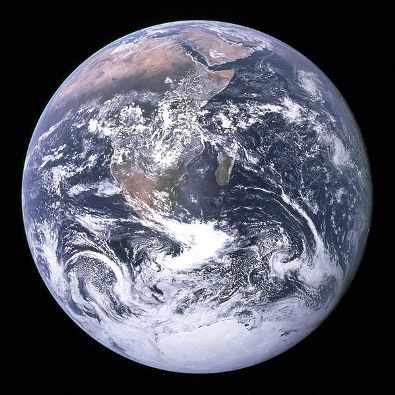
BlueMarble

7. David R. Scott, mission commander, Apollo 15. Reached the moon July 31, 1971.

Although Dave Scott finished fifth in his class at West Point, he joined the Air Force instead of the Army in order to pursue his dream of becoming a jet pilot. By the time he took command of Apollo 15, Scott was already a space veteran — he had accompanied Neil Armstrong on the glitch-plagued Gemini 8 mission, and had become the last American to orbit the Earth solo as the command module pilot on Apollo 9. He became the first member of Astronaut Group 3 to command a mission, and the first astronaut to lead a so-called “J Mission,” with an extended stay on the lunar surface (Scott and teammate Jim Irwin spent nearly three full days on the moon) and use of the Lunar Rover excursion vehicle.

Beyond the moon: Scott’s NASA career came to an abrupt end due to what came to be known as the Apollo 15 postage stamp incident. Scott, with the knowledge of his crew, had smuggled 398 commemorative stamp covers on his trip to the moon, and later sold 100 of the covers to Hermann Sieger, a collectibles dealer from Germany. The action was neither illegal or forbidden by NASA protocol, but when certain members of Congress got wind of the back-door business deal, political furor and Capitol Hill hearings ensued. As a result, neither Scott nor his two crewmates ever flew another space mission. (The 100 “Sieger covers” are now valued at between $15,000 and $18,000 each.) Today, Scott lives in the Los Angeles area and is a frequent consultant on film and television projects. He is 77 years old.

8. James B. Irwin, lunar module pilot, Apollo 15. Reached the moon July 31, 1971.

Like Dave Scott, Jim Irwin graduated from another service academy — in Irwin’s case, the U.S. Naval Academy — before joining the Air Force. Apollo 15 was Irwin’s first and only spaceflight, though he played key backup roles in training for two prior Apollo missions. The scientific nature of this particular mission required Irwin and Scott to undergo extensive training in geology — training that led to their discovery and identification of the so-called Genesis Rock, a chunk of lunar material believed to date from the formation of the moon.

Beyond the moon: Although Irwin never flew another NASA mission because of the aforementioned stamp incident, it’s likely that he would have been decertified for space in any event. He experienced cardiac symptoms during his and Scott’s time on the moon, and suffered a heart attack a few months after their return to Earth. Resigning from NASA in 1972, Irwin began a new career in ministry. He later led several unsuccessful expeditions to Turkey in search of the wreckage of Noah’s ark. Jim Irwin succumbed to a heart attack at his Colorado home in 1991 — the first of the moonwalkers to die, as well as the youngest. He was 61.

9. John W. Young, mission commander, Apollo 16. Reached the moon April 21, 1972.

Navy test pilot John Young was one of the graybeards of the Apollo program. He had already been into space three times before his trip to the moon — as pilot alongside Mercury veteran Gus Grissom on the first manned Gemini mission (Gemini 3); as command pilot aboard Gemini 10; and as command module pilot on Apollo 10, the second and final lunar orbital mission before Apollo 11‘s historic landing. During the latter mission, Young became the first man to orbit the moon solo, as his colleagues tested the lunar module. Commanding Apollo 16 earned Young an additional distinction as the first individual to make a return trip to lunar orbit.

Beyond the moon: John Young may well hold the title of NASA’s busiest astronaut. He continued with the  program into the Space Shuttle era — the only Mercury veteran to do so — and was at the helm for the Shuttle’s first space mission as well as one later flight. The first individual to make six journeys into space, Young is also the only person to have piloted four different types of spacecraft — a Gemini capsule, both Apollo vehicles (the command module and the lunar module), and the Shuttle. He retired from NASA in 2004 after 42 years in the space program. Young still lives in Houston, and is 78 years old.

10. Charles M. Duke, Jr., lunar module pilot, Apollo 16. Reached the moon April 21, 1972.

A Naval Academy graduate and Air Force pilot, Charlie Duke was already familiar to followers of the space program before his rookie flight on Apollo 16. It was Duke’s Carolina drawl at Mission Control that viewers heard speaking with Armstrong and Aldrin during the Apollo 11 moon landing. (Astronauts were frequently assigned capsule communicator, or “CAPCOM,” duties for flights on which they were not the designated backup crew.) Duke also had figured in the run-up to the ill-fated Apollo 13 mission. As Apollo 13‘s backup lunar module pilot, Duke’s bout of rubella resulted in fellow astronaut Ken Mattingly — who had not previously been exposed to the disease — being removed from the mission and replaced with Jack Swigert. Mattingly then joined Duke and Young as Apollo 16‘s command module pilot.

Beyond the moon: Duke retired from NASA in 1975 and became a successful entrepreneur. He is also active as a speaker and consultant. At age 73, Duke is the youngest member of the moonwalkers’ fraternity.

11. Eugene A. Cernan, mission commander, Apollo 17. Reached the moon December 11, 1972.

Gene Cernan, the son of immigrants from eastern Europe, came to NASA as a Naval aviator and aeronautical engineer. His first space mission was the star-crossed Gemini 9, where Cernan and Thomas Stafford moved from backup to primary crew after the astronauts originally assigned were killed in a plane crash. On Apollo 10, Cernan served as lunar module pilot (with Stafford as mission commander), making him the only astronaut to have descended to the moon in a lunar module on two separate occasions — albeit without landing on the initial trip.

Although the 11th person to walk on the moon, Cernan also holds the current distinction of having been the last person to have accomplished the feat, as the second man to reboard the lunar module after Apollo 17‘s final EVA. Cernan spoke the final words to date by a human being standing on the lunar surface:

As we leave the moon at Taurus-Littrow, we leave as we came, and God willing, as we shall return, with peace and hope for all mankind. As I take these last steps from the surface for some time to come, I’d just like to record that America’s challenge of today has forged man’s destiny of tomorrow. God speed the crew of Apollo 17.

Beyond the moon: Gene Cernan has spent most of his post-NASA career as a businessman and as a speaker on space-related topics. For a number of years, he was the regular spaceflight commentator for ABC News. He is the author of the autobiography Last Man on the Moon, which chronicles his astronaut years. In January of this year, Cernan appeared here in Santa Rosa at the Charles M. Schulz Museum for the opening of a space-themed Peanuts exhibit. Cernan is now 75 years old.

12. Harrison H. Schmitt, lunar module pilot, Apollo 17. Reached the moon December 11, 1972.

Harrison “Jack” Schmitt’s arrival on the moon was preceded by controversy. Originally, astronaut Joseph Engle had been scheduled as Apollo 17‘s lunar module pilot. When the final three Apollo missions were canceled, however, the scientific community that had so enthusiastically supported NASA insisted that a scientist — as opposed to a military officer (although Neil Armstrong had retired from the Navy before joining NASA) — should be part of the final moon mission of the era. Thus, Engle was replaced by Schmitt, a geologist with degrees from Caltech and Harvard — the only geological expert in the astronaut ranks.

Although Gene Cernan was vocal in his disapproval of Engle’s removal from his team, by all accounts he and Schmitt worked well together during their lunar excursion. During Apollo 17‘s outbound voyage, Schmitt snapped one of the most famous photographs ever taken — the shot of Earth from space usually referred to as “The Big Blue Marble.”

Beyond the moon: Schmitt left NASA in 1975 to run for the U.S. Senate. He served a single term as a Republican from New Mexico. After being defeated for reelection, Schmitt focused on consulting and education. Until last year, he chaired the NASA Advisory Council, a group of scientists, policymakers, and former astronauts charged with providing technical guidance to the NASA Administrator. Schmitt still lives in his native New Mexico, and is 74 years old.

And that’s it.

To this date, these are the only 12 people who have stood on the surface of the moon. No new member has joined their elite fraternity in almost 37 years.

Nine of the moonwalkers survive. Given that all nine are in their 70s, that status will likely not hold for long. It’s my sincere hope that at least some of them live long enough to see others do what they alone have done.

What a shame it would be for the human race if the moonwalkers — the representatives of our loftiest purpose, our greatest collective endeavor, our highest material achievement — became extinct.

As a citizen, I challenge President Obama, the members of Congress, and the administrators of NASA:

Ignore the naysayers.

Let’s go back to the moon.

And on to Mars.

Moonwalkers, part one

July 20, 2009

No, this is not a Michael Jackson post.

Apollo11crew

If you were five years or older on this date 40 years ago, you remember.

You remember the tingle of excitement. You remember the wonder. You remember the grainy images of two men in bulky white pressure suits and their static-charged banter with their handlers a quarter of a million miles away. And you remember the words:

That’s one small step for a man… one giant leap for mankind.

How could you not remember?

For the first time, human beings had set foot on the surface of another world.

Had you told me then, a third-grader basking in the glow of a cathode ray tube in a military-base townhouse in central Maine, that four decades later, the exclusive club opened on that amazing day by Neil Armstrong and Buzz Aldrin would have a grand total of twelve members, I would not have believed you.

I find it nearly impossible to believe even now.

And yet, it’s true. Two generations after humans first stood on the moon, only a dozen of our kind have ever done so. None have accomplished the feat since 1972 — 37 years ago.

I think that’s one of our greatest failures. As a nation, and as a species. We gave up on the incredible, and began settling for the mundane.

In an effort to inspire ourselves, let’s reflect for a moment on those bold pioneers who first touched the stars.

1. Neil A. Armstrong, mission commander, Apollo 11. Reached the moon July 20, 1969.

A former U.S. Navy aviator and experienced test pilot, Armstrong was one of only two civilians selected in 1962 for NASA’s second astronaut group, dubbed “the New Nine.” He commanded the Gemini 8 mission, and had been forced to abort that flight early due to a malfunctioning attitude thruster. Armstrong was chosen to lead the first lunar landing because he was considered NASA’s most capable pilot in critical emergency situations.

Beyond the moon: Armstrong left NASA shortly after Apollo 11. He has worked mostly as an engineering consultant and member of several corporate boards of directors. Armstrong served on the panel that investigated the explosion that prematurely terminated the Apollo 13 mission, and was vice-chairman of the Rogers Commission, which investigated the destruction of Space Shuttle Challenger in 1986. He is now 78 years old.

2. Edwin E. (Buzz) Aldrin, Jr., lunar module pilot, Apollo 11. Reached the moon July 20, 1969.

The MIT-educated Aldrin was a U.S. Air Force jet fighter and test pilot before joining NASA’s third astronaut group. His first spaceflight came as the pilot of Gemini 12, during which he undertook three EVAs (extra-vehicular activities, or “spacewalks”) totaling 5.5 hours. Aldrin’s experience working outside the spacecraft led to his selection for the Apollo 11 team. Aldrin’s “Contact light… okay… engine stop” as Apollo 11‘s lunar module Eagle came to rest were the first words ever spoken from the moon’s surface.

Beyond the moon: Aldrin’s early post-NASA years were marked by struggles with alcoholism and depression. He wrote about these difficulties in his 1973 autobiography Return to Earth, and more recently in its follow-up, Magnificent Desolation, published earlier this year. Aldrin has been and remains an active advocate for space exploration, and speaks extensively on the subject. The Disney/Pixar animated character Buzz Lightyear is named after Aldrin.

3. Charles M. (Pete) Conrad, Jr., mission commander, Apollo 12. Reached the moon November 19, 1969.

Pete Conrad overcame dyslexia to excel as a U.S. Navy aviator and flight instructor. At the time of his moon flight, Conrad was one of NASA’s most experienced astronauts, making his third trip into space aboard Apollo 12. Previously, Conrad had served as pilot on Gemini 5, and as commander aboard Gemini 11. Among the shortest members of the astronaut corps, the iconoclastic Conrad famously wisecracked about his size as he took his first step from the lunar module: “Whoopee! Man, that may have been a small one for Neil, but that’s a long one for me.”

Beyond the moon: Conrad was scheduled to return to the moon as commander of what would have been the Apollo 20 mission. The cancellation of the Apollo program found him instead as the initial commander of America’s first manned space station, Skylab. Conrad’s Skylab 2 crew (the Skylab 1 mission designation referred to the unmanned launch of the space station itself; the first launch of astronauts to the station was thus Skylab 2) set a space endurance record of 28 days. Leaving NASA, Conrad worked for McDonnell Douglas for 20 years. In 1996, he led a team that set the record for circumnavigating the globe in a Learjet. Conrad was killed in a motorcycle accident near his southern California home in 1999, at the age of 69.

4. Alan L. Bean, lunar module pilot, Apollo 12. Reached the moon November 19, 1969.

A member of NASA’s third astronaut group, Alan Bean was a former student of Pete Conrad’s at the Naval Flight Test School. The death of another astronaut in a motor vehicle accident opened an opportunity for Conrad to request Bean for his Apollo 12 crew.

Beyond the moon: Bean returned to space in 1973 as commander of the second Skylab crew, designated Skylab 3. After this record-setting mission, Bean served for several years as the civilian director of Astronaut Candidate Operations and Training. These days, he’s an accomplished artist who specializes in painting lunar landscapes. Bean also recently co-wrote, with fellow astronauts Owen Garriott and Joseph Kerwin, a book about the Skylab missions entitled Homesteading Space. Alan Bean lives is Houston and is 77.

5. Alan B. Shepard, Jr., mission commander, Apollo 14. Reached the moon February 5, 1971.

America’s first man in space became its oldest man on the moon when 47-year-old Mercury veteran Alan Shepard made his long-delayed return to active duty as commander of Apollo 14. Shepard had been deemed unfit for space for several years following his initial flight due to Ménière’s disease, an inner ear disorder. He spent the intervening years as Chief of the Astronaut Office until his condition was surgically corrected.

Ironically, Shepard replaced another member of the Mercury Seven, L. Gordon “Gordo” Cooper, on the team when Cooper was bumped due to his lackadaisical training habits and adversarial relationship with the NASA brass. Avid golfer Shepard made history in another way during his moon expedition, when he volleyed off a couple of golf shots into the lunar night with a jury-rigged six-iron (he attached the head of a Wilson club to the handle of a NASA-issued shovel).

Beyond the moon: Shepard resumed his duties as chief astronaut after Apollo 14. He retired in 1974 and became a successful entrepreneur. Moon Shot, a book Shepard coauthored with journalists Jay Barbree and Howard Benedict, formed the basis of a TV miniseries in 1994. Shepard died from leukemia in 1998, at the age of 74.

6. Edgar D. Mitchell, lunar module pilot, Apollo 14. Reached the moon February 5, 1971.

Ed Mitchell became a moonwalker on his one and only spaceflight. A member of NASA’s fifth astronaut class in 1966, the former Naval research pilot and flight instructor held a doctorate in aeronautics from what is now Carnegie Mellon University.

Beyond the moon: Mitchell is probably best known today for his widely publicized views on the paranormal. He conducted ESP experiments during the Apollo 14 mission, and believes that UFOs may actually be alien spacecraft. He has stated in interviews that the infamous Roswell, New Mexico event in 1947 was the crash of one such craft, and that NASA, the Pentagon, and other U.S. government agencies are involved in shielding the general public from the truth about evidence of visitors from other planets. Mitchell, now age 78, lives in West Palm Beach, Florida.

These are the first six. We’ll take a look at the other half of the Moonwalkers Club in tomorrow’s post.

Nine

July 16, 2009

They’re down to the final table at the World Series of Poker’s Main Event tournament, and a couple of familiar faces are still in the mix.

My poker hero, Phil Ivey — a.k.a. The Tiger Woods of Poker — sits in seventh place. Phil has been on quite a roll at the WSOP this year, adding two victories in earlier tournaments to bring his career bracelet total to seven. Despite holding one of the shorter stacks at the Main Event final table, Phil will be the player to watch when the tournament finishes in November.

Also earning one of the coveted seats is Card Player Magazine publisher Jeff Shulman, making his second appearance at a Main Event final table. Shulman finished seventh back in 2000, the year Chris “Jesus” Ferguson won all the chips and the gold bracelet. Jeff will be in fourth place when play resumes.

As has become the norm at the WSOP, the chip leader is an unknown — Darvin Moon, who’s said to be a lumberjack from Maryland. (I don’t know whether there’s any validity to the rumor that Moon puts on women’s clothing and hangs around in bars.)

The complete final table, with current chip counts, looks like this:

1. Darvin Moon – 58,930,000
2. Eric Buchman – 34,800,000
3. Steven Begleiter – 29,885,000
4. Jeff Shulman – 19,580,000
5. Joseph Cada – 13,215,000
6. Kevin Schaffel – 12,390,000
7. Phil Ivey – 9,765,000
8. Antoine Saout – 9,500,000
9. James Akenhead – 6,800,000

I’m still not sold on the gimmick, begun last year, of stopping the Main Event when the final table is set, and continuing play in November. I understand the logic — it affords four months to build suspense and public awareness, and gives ESPN a big event to broadcast during the fall ratings sweeps — but it just seems stupid to halt a tournament in mid-game and take 16 weeks off before resuming. It would be like baseball holding the divisional playoffs and league championship series in October, then not playing the World Series until the following spring. All of the momentum — for both participants and spectators — is gone.

But that’s yet another reason why I’m not in charge.

Personally, I wouldn’t want to spend four months listening to the onrushing footsteps of Phil Ivey. Then again, considering that every member of the November Nine is guaranteed a minimum $1.2 million payday…

…I think I’d get over it.

My date with the Mitchell Brothers, revisited

July 13, 2009

The hot story around these parts today is the arrest of James Raphael Mitchell, who stands accused of beating his girlfriend to death and kidnapping their infant daughter over this past weekend. (The child was found unharmed and returned safely to her maternal grandmother. Thanks for asking.)

Mitchell is the son of the late Jim Mitchell, of the notorious Mitchell Brothers, once the Pornography Kings of San Francisco. (Marilyn Chambers, Behind the Green Door, the O’Farrell Theatre, Rated Xthose Mitchell Brothers.)

You may recall that back in 1991, Jim killed his high-living sibling Artie — the junior half of the aforementioned Brothers — and ultimately served three years in prison for manslaughter. Post-incarceration, Jim died of a heart attack at his home right here in Sonoma County in 2007.

All of the above simply affords me the opportunity (or excuse — choose the word you prefer) to share with you again the once-told story of my now-legendary interview with Jim and Artie Mitchell, back in the day.

It’s okay… the link is SFW.

Trust me.