Archive for the ‘Listology’ category

The walking, talking, I-don’t-care man

August 17, 2009

It’s Monday, and here’s a bunch of things that I just can’t bring myself to give a rip about.

  • Jon, Kate, their eight, or their dates.
  • Soccer.
  • KISS selling its new album at Walmart.
  • Whether Walmart is spelled Walmart or Wal-Mart.
  • The BART non-strike.
  • Michael Vick’s future in the NFL.
  • Project Runway.
  • Any opinion expressed on talk radio.
  • Whether Gwyneth Paltrow likes Scarlett Johannson.
  • The Time Traveler’s Wife.
  • Tom DeLay appearing on Dancing with the Stars.
  • Brett Favre.
  • Alyssa Milano’s wedding.
  • Big Brother.
  • Vegetarianism.
  • Veganism.
  • Antidisestablishmentarianism.
  • Isms in general.
  • Any opinion expressed on FOX News.
  • Madonna’s biceps.
  • Lady Gaga.
  • The Chrome OS.
  • Burger King.

I could probably come up with a few more. But I just don’t care.

Life is not a John Hughes movie

August 6, 2009

I just saw the bulletin that movie maven John Hughes died today, of an apparent heart attack.

How great a loss this news is to the cinematic community depends somewhat on your tastes. It also depends, to a certain degree, on your age, as Hughes — one of Hollywood’s most active and popular producer/directors throughout the 1980s — helmed his last film in 1991. Hughes retired to his native Upper Midwest in the ’90s, and has been entirely absent from the entertainment scene for the past decade.

But when the man was working, he was money in the bank.

I first discovered Hughes long before he got into the movie business, when he was a staff writer and editor for National Lampoon magazine in the 1970s. Hughes was my favorite Lampoon scribe, contributing infinite belly-laughs to those halcyon times when I sported considerably less belly. I still have, buried in a filing cabinet somewhere, a copy of the Sunday newspaper parody that he and PJ O’Rourke cowrote in 1978. It was one of the funniest things my adolescent brain had ever read at the time. I’ll have to dig it out and see whether the sophomoric humor holds up.

Hughes soon segued from publishing to film, scripting the comedy hits Mr. Mom and National Lampoon‘s Vacation in 1983. The following year, he made his directorial debut with the movie that made Molly Ringwald a superstar: Sixteen Candles. For the next several years, Hughes could do no wrong — he wrote and directed such classics as The Breakfast Club, Weird Science, Ferris Bueller’s Day Off (my personal favorite), Planes, Trains & Automobiles, and Uncle Buck.

When Hughes wasn’t directing his own scripts, he was penning screenplays to be lensed by his army of protégés — Pretty in Pink (directed by Howard Deutsch), Some Kind of Wonderful (Deutsch again), National Lampoon‘s Christmas Vacation (Jeremiah Chechik), Home Alone (Chris Columbus) and its two theatrical sequels (Columbus redux, then Raja Gosnell), Career Opportunities (Bryan Gordon), Beethoven (Brian Levant), Dennis the Menace (Nick Castle), and the live-action remakes of 101 Dalmatians (Stephen Herek) and Flubber (Les Mayfield).

If you added up the combined box office from all of the above flicks, you could pretty much erase the national deficit.

The critics didn’t always embrace Hughes’s works, especially in his latter period from Home Alone forward. (In fairness to those critics, they were right about the stuff Hughes churned out during the 1990s.) His name became synonymous with teen angst, the Brat Pack, and mawkish sentimentality. For abut 15 years, though, the public devoured almost everything on which the Hughes name (and his nom de plume Edmond Dantes) appeared.

I never knew why Hughes left the business in the late ’90s. I don’t know whether he lost creative focus, got tired of the ridicule from film snobs, or just decided to take his mega-millions and go home. But when one’s name becomes the brand for an entire genre of cinema — if you say “John Hughes film” to anyone who knows movies, they know exactly what you mean — he or she has accomplished something. Like it or not, Hughes’s legacy is more than secure.

In memoriam, we present Uncle Swan’s Top Seven John Hughes Films, in ascending order of greatness.

7. Nate and Hayes. The third Hughes screenplay produced in 1983, and the only one to bomb at the box office, it’s Hughes’s most atypical effort — a pirate movie starring Tommy Lee Jones. It’s largely forgotten today, but if you enjoy Disney’s Pirates of the Caribbean trilogy, it’s well worth seeking out. Directed by the otherwise obscure Ferdinand Fairfax.

6. Weird Science. Best remembered for its bombshell starring turn by Kelly LeBrock (the future Mrs. Steven Seagal) and its quirky theme song by Oingo Boingo, this bizarre fantasy also features solid work by young actors Anthony Michael Hall — a Hughes staple — and Ilan Mitchell-Smith. Any movie in which Bill Paxton turns into a humongous pile of excrement — literally! — is worth seeing once.

5.The Breakfast Club. The quintessential Brat Pack flick. The acting is worse than you remember — Emilio Estevez, Molly Ringwald, and Ally Sheedy are dreadful here, and Judd Nelson is… well… Judd Nelson. But the screenplay, while overwrought, is effective, and the lesser roles are excellently performed (especially the underrated Hall — again — and Paul Gleason). Besides, it’s an icon of the Me Decade.

4. National Lampoon‘s Vacation. Still hilarious after all these years. Right now, I’m betting that you can quote a dozen lines from this movie. Docked one place on the list for making Chevy Chase think he’s funnier than he is. (Has Chevy ever made a non-Vacation comedy that was even remotely good?)

3. Some Kind of Wonderful. The best Hughes film not directed by Hughes is also one of the strongest, most realistic teen pictures in Hollywood history. It also boasts the solid cast that The Breakfast Club desperately needed. Can you imagine Eric Stoltz as Andrew, Lea Thompson as Claire, Mary Stuart Masterson as Crazy Freak Girl, and Elias Koteas as Bender? Now that would have been some kind of wonderful.

2. Planes, Trains & Automobiles. Hughes’s most adult comedy, and his only one centered around two fully realized and believable adult characters. It’s one of the few films in which Steve Martin plays straight man to a superior comedian. John Candy finally got a starring role worthy of his talents. A Thanksgiving weekend staple at Casa de Swan.

1. Ferris Bueller’s Day Off. The best teenage comedy ever made — period — and among the finest film comedies of all time. About as flawless an example of the genre as could be constructed, while managing to be touching and thoughtful at the same time. Matthew Broderick creates one of the truly great comic heroes, and Jeffrey Jones matches him note for note as one of the great comic villains.

As Ferris Bueller once said, “Life moves pretty fast. If you don’t stop and look around once in a while, you could miss it.” John Hughes, dead at 59, proves the truth of those words.

The threes of me

July 23, 2009

Those of you who’ve been reading this blog over the five years of its existence know that I’m not a fan of memes. You know, those little questionnaires or lists that are intended to give you something to write about on days when you can’t come up with something to write about (when I have those days, I — duh! — simply don’t write), and with which you’re supposed to “tag” your blogosphere buddies so that they, too, can participate in the merriment. (I’m not big on suggesting to other people what they ought to be writing about, any more than I’m a fan of being told what to write.)

I’m not, however, a total stick in the mud on the meme issue. Once in a blue moon, someone will tag me on a meme, and I’ll do it either because I like the person or the topic or both.

In this case, my friend Nathan tagged me with this list on Facebook. I enjoyed reading Nathan’s list, so I thought I’d return the favor. Ever the iconoclast, I’m doing the meme here rather than on Facebook, because this is where I write. And you can breathe easy — I’m not going to tag anyone, though you’re certainly welcome to pick up the ball and run with it if you’re thus inclined.

So, onward.

Three names by which I’m known.
1. Michael. This should be obvious, given that it’s my first name.
2. The Mic Guy. One of my chorus mates hung this one on me a dozen or so years ago, and it’s stuck so resolutely that I’m now using it as the brand for my voiceover business.
3. Uncle Swan. If you’re here, you know.

Three jobs I have had.
1. Receiving clerk. The year and a half that I was between colleges, I worked in a drug store. For most of the time, I was a sales clerk in the electronics department (we called it the camera department back in those pre-PC, cell phone, and iPod days). But for about six months, I ran the store’s warehouse, because the job was a prerequisite for management and someone above me was foolish enough to think that I might eventually aspire to managing a drug store. That person was sadly mistaken.
2. Radio advertising salesman. In my first job out of college, I worked in outside sales for a country music radio station. This will be hilarious to those of you who know that my affection for country music ranks somewhere between my fondness for serial pedophiles and my love for flesh-eating staphylococcus.* Right as I was arriving, the station was sold to some faceless corporation. One of the new owners’ first actions entailed firing half of the sales staff, yours truly included. In my case, the move was a relief — I sucked at advertising sales, and as for country music… I think we’ve covered that.
3. Radio Shack manager. In need of gainful employment following the redneck radio debacle, I wandered into my local Radio Shack store and filled out an application. (After all, I hold a university degree in broadcast communications.) Within a week, I had a job. Within three weeks, I was an assistant manager. After nearly a year of refusing promotion opportunities, I let them make me a store manager because they were going to fire me if I said “no” again. That tells you pretty much everything you need to know about Radio Shack.

* Nathan, who happens to be an actual card-carrying microbiologist, informs me that the flesh-eating bacteria is actually a strain of streptococcus, not staphylococcus. Here at SSTOL, we never allow scientific accuracy to get in the way of a good joke. As long as it’s not olympiaducoccus, it’s close enough for me.

Three places where I have lived. (Because I grew up in a military family, I could easily make this “Ten places where I have lived.” But in the spirit of the meme, I’ll pick three. And I’ll skip Hawaii, since I’ve written about that fairly recently.)
1. Iraklion (or Heraklion, if that’s how you roll), Crete, Greece. We were there for two years in the early 1970s. Lovely place, warm and friendly people, great food. Those sand fleas are murder, though.
2. Angeles City, Luzon, the Philippines. Another two-year stint for Uncle Sam, somewhat later in the Disco Decade. We arrived shortly after local despot Ferdinand Marcos declared martial law. We left just as the Vietnam War was ending. Strange times indeed.
3. Abilene, Texas. I spent a decade there one year. At least, it felt that way. The most hellacious place I’ve ever lived, and there isn’t even a close runner-up. If you’re from Abilene, I apologize for airing your dirty laundry in public, but… deep in your heart, you know I speak the truth.

Three favorite drinks.
1. Cream soda. The good stuff — Thomas Kemper, Virgil’s, et al. — when I can get it on sale, but even the supermarket brand suffices in a pinch.
2. Vanilla Coke. Are you sensing a theme here?
3. The vanilla milkshakes Jack in the Box used to serve when I was in high school, before Jack botched the recipe and turned them into syrupy swill.

Three TV Shows that I watch.
1. Burn Notice. Hopefully they won’t have to stop production due to star Jeffrey Donovan’s recent DUI arrest. The world needs more Bruce Campbell. More Gabrielle Anwar isn’t a bad thing, either.
2. Chopped. I’ve been a devotee of competitive cooking shows since the original Iron Chef was on the air. Food Network’s latest entry in the genre is more of the same, with a fun twist or two. Plus, how could you not love a show called Chopped?
3. In Plain Sight. Who knew that Albuquerque was so exciting?

Three places I have been. (This, I suppose, as contrasted with places where I’ve lived for any length of time.)
1. Taipei, Taiwan. My family went on vacation there while we were in the Philippines. More people crammed into less space than anywhere else I’ve ever seen, aside from Tokyo. Beware the lunatic taxi drivers.
2. Athens, Greece. We made several jaunts to Athens during our years in Crete. Aside from San Francisco, the most visually compelling city I’ve ever visited.
3. Cities I’ve only seen from their respective airports: Paris, France; Rome, Italy; Frankfurt, Germany; Anchorage, Alaska; Agana, Guam. But at least I can honestly say that I’ve been there.

Three of my favorite foods.
1. Sushi. Among my top choices: unagi, tako, saba, ebi, tobiko, and when I can find the good stuff in season, otoro.
2. Mashed potatoes. Sometimes, the simplest things in life are best.
3. Chili — preferably my own, served with rice and plenty of hot sauce.

Three things to which I’m looking forward.
1. Pat Fraley’s workshop on voice acting for video games two weeks from Saturday. I had a terrific time in a workshop with Pat earlier this year, and am thrilled to have another chance to study with him.
2. The long-anticipated completion of a quartet of commissions that artist Darryl Banks is drawing for my Bombshells! gallery. Each depicts one of the four key female characters in Will Eisner’s legendary comic series, The Spirit. Darryl’s work on the first two pieces in the series has been stunning.
3. A manned landing on Mars, and a cure for cancer. When I dream, I dream big.

Moonwalkers, part two

July 21, 2009

As we commemorate the 40th anniversary of the Apollo 11 lunar landing, we continue with the second half of that most exclusive of clubs: men who have walked on the moon. (You can read about the first six moonwalkers here.)
BlueMarble

7. David R. Scott, mission commander, Apollo 15. Reached the moon July 31, 1971.

Although Dave Scott finished fifth in his class at West Point, he joined the Air Force instead of the Army in order to pursue his dream of becoming a jet pilot. By the time he took command of Apollo 15, Scott was already a space veteran — he had accompanied Neil Armstrong on the glitch-plagued Gemini 8 mission, and had become the last American to orbit the Earth solo as the command module pilot on Apollo 9. He became the first member of Astronaut Group 3 to command a mission, and the first astronaut to lead a so-called “J Mission,” with an extended stay on the lunar surface (Scott and teammate Jim Irwin spent nearly three full days on the moon) and use of the Lunar Rover excursion vehicle.

Beyond the moon: Scott’s NASA career came to an abrupt end due to what came to be known as the Apollo 15 postage stamp incident. Scott, with the knowledge of his crew, had smuggled 398 commemorative stamp covers on his trip to the moon, and later sold 100 of the covers to Hermann Sieger, a collectibles dealer from Germany. The action was neither illegal or forbidden by NASA protocol, but when certain members of Congress got wind of the back-door business deal, political furor and Capitol Hill hearings ensued. As a result, neither Scott nor his two crewmates ever flew another space mission. (The 100 “Sieger covers” are now valued at between $15,000 and $18,000 each.) Today, Scott lives in the Los Angeles area and is a frequent consultant on film and television projects. He is 77 years old.

8. James B. Irwin, lunar module pilot, Apollo 15. Reached the moon July 31, 1971.

Like Dave Scott, Jim Irwin graduated from another service academy — in Irwin’s case, the U.S. Naval Academy — before joining the Air Force. Apollo 15 was Irwin’s first and only spaceflight, though he played key backup roles in training for two prior Apollo missions. The scientific nature of this particular mission required Irwin and Scott to undergo extensive training in geology — training that led to their discovery and identification of the so-called Genesis Rock, a chunk of lunar material believed to date from the formation of the moon.

Beyond the moon: Although Irwin never flew another NASA mission because of the aforementioned stamp incident, it’s likely that he would have been decertified for space in any event. He experienced cardiac symptoms during his and Scott’s time on the moon, and suffered a heart attack a few months after their return to Earth. Resigning from NASA in 1972, Irwin began a new career in ministry. He later led several unsuccessful expeditions to Turkey in search of the wreckage of Noah’s ark. Jim Irwin succumbed to a heart attack at his Colorado home in 1991 — the first of the moonwalkers to die, as well as the youngest. He was 61.

9. John W. Young, mission commander, Apollo 16. Reached the moon April 21, 1972.

Navy test pilot John Young was one of the graybeards of the Apollo program. He had already been into space three times before his trip to the moon — as pilot alongside Mercury veteran Gus Grissom on the first manned Gemini mission (Gemini 3); as command pilot aboard Gemini 10; and as command module pilot on Apollo 10, the second and final lunar orbital mission before Apollo 11‘s historic landing. During the latter mission, Young became the first man to orbit the moon solo, as his colleagues tested the lunar module. Commanding Apollo 16 earned Young an additional distinction as the first individual to make a return trip to lunar orbit.

Beyond the moon: John Young may well hold the title of NASA’s busiest astronaut. He continued with the  program into the Space Shuttle era — the only Mercury veteran to do so — and was at the helm for the Shuttle’s first space mission as well as one later flight. The first individual to make six journeys into space, Young is also the only person to have piloted four different types of spacecraft — a Gemini capsule, both Apollo vehicles (the command module and the lunar module), and the Shuttle. He retired from NASA in 2004 after 42 years in the space program. Young still lives in Houston, and is 78 years old.

10. Charles M. Duke, Jr., lunar module pilot, Apollo 16. Reached the moon April 21, 1972.

A Naval Academy graduate and Air Force pilot, Charlie Duke was already familiar to followers of the space program before his rookie flight on Apollo 16. It was Duke’s Carolina drawl at Mission Control that viewers heard speaking with Armstrong and Aldrin during the Apollo 11 moon landing. (Astronauts were frequently assigned capsule communicator, or “CAPCOM,” duties for flights on which they were not the designated backup crew.) Duke also had figured in the run-up to the ill-fated Apollo 13 mission. As Apollo 13‘s backup lunar module pilot, Duke’s bout of rubella resulted in fellow astronaut Ken Mattingly — who had not previously been exposed to the disease — being removed from the mission and replaced with Jack Swigert. Mattingly then joined Duke and Young as Apollo 16‘s command module pilot.

Beyond the moon: Duke retired from NASA in 1975 and became a successful entrepreneur. He is also active as a speaker and consultant. At age 73, Duke is the youngest member of the moonwalkers’ fraternity.

11. Eugene A. Cernan, mission commander, Apollo 17. Reached the moon December 11, 1972.

Gene Cernan, the son of immigrants from eastern Europe, came to NASA as a Naval aviator and aeronautical engineer. His first space mission was the star-crossed Gemini 9, where Cernan and Thomas Stafford moved from backup to primary crew after the astronauts originally assigned were killed in a plane crash. On Apollo 10, Cernan served as lunar module pilot (with Stafford as mission commander), making him the only astronaut to have descended to the moon in a lunar module on two separate occasions — albeit without landing on the initial trip.

Although the 11th person to walk on the moon, Cernan also holds the current distinction of having been the last person to have accomplished the feat, as the second man to reboard the lunar module after Apollo 17‘s final EVA. Cernan spoke the final words to date by a human being standing on the lunar surface:

As we leave the moon at Taurus-Littrow, we leave as we came, and God willing, as we shall return, with peace and hope for all mankind. As I take these last steps from the surface for some time to come, I’d just like to record that America’s challenge of today has forged man’s destiny of tomorrow. God speed the crew of Apollo 17.

Beyond the moon: Gene Cernan has spent most of his post-NASA career as a businessman and as a speaker on space-related topics. For a number of years, he was the regular spaceflight commentator for ABC News. He is the author of the autobiography Last Man on the Moon, which chronicles his astronaut years. In January of this year, Cernan appeared here in Santa Rosa at the Charles M. Schulz Museum for the opening of a space-themed Peanuts exhibit. Cernan is now 75 years old.

12. Harrison H. Schmitt, lunar module pilot, Apollo 17. Reached the moon December 11, 1972.

Harrison “Jack” Schmitt’s arrival on the moon was preceded by controversy. Originally, astronaut Joseph Engle had been scheduled as Apollo 17‘s lunar module pilot. When the final three Apollo missions were canceled, however, the scientific community that had so enthusiastically supported NASA insisted that a scientist — as opposed to a military officer (although Neil Armstrong had retired from the Navy before joining NASA) — should be part of the final moon mission of the era. Thus, Engle was replaced by Schmitt, a geologist with degrees from Caltech and Harvard — the only geological expert in the astronaut ranks.

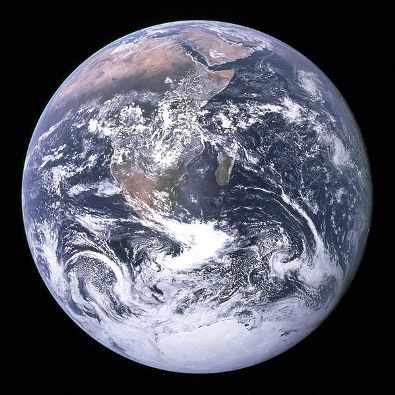
Although Gene Cernan was vocal in his disapproval of Engle’s removal from his team, by all accounts he and Schmitt worked well together during their lunar excursion. During Apollo 17‘s outbound voyage, Schmitt snapped one of the most famous photographs ever taken — the shot of Earth from space usually referred to as “The Big Blue Marble.”

Beyond the moon: Schmitt left NASA in 1975 to run for the U.S. Senate. He served a single term as a Republican from New Mexico. After being defeated for reelection, Schmitt focused on consulting and education. Until last year, he chaired the NASA Advisory Council, a group of scientists, policymakers, and former astronauts charged with providing technical guidance to the NASA Administrator. Schmitt still lives in his native New Mexico, and is 74 years old.

And that’s it.

To this date, these are the only 12 people who have stood on the surface of the moon. No new member has joined their elite fraternity in almost 37 years.

Nine of the moonwalkers survive. Given that all nine are in their 70s, that status will likely not hold for long. It’s my sincere hope that at least some of them live long enough to see others do what they alone have done.

What a shame it would be for the human race if the moonwalkers — the representatives of our loftiest purpose, our greatest collective endeavor, our highest material achievement — became extinct.

As a citizen, I challenge President Obama, the members of Congress, and the administrators of NASA:

Ignore the naysayers.

Let’s go back to the moon.

And on to Mars.

Moonwalkers, part one

July 20, 2009

No, this is not a Michael Jackson post.

Apollo11crew

If you were five years or older on this date 40 years ago, you remember.

You remember the tingle of excitement. You remember the wonder. You remember the grainy images of two men in bulky white pressure suits and their static-charged banter with their handlers a quarter of a million miles away. And you remember the words:

That’s one small step for a man… one giant leap for mankind.

How could you not remember?

For the first time, human beings had set foot on the surface of another world.

Had you told me then, a third-grader basking in the glow of a cathode ray tube in a military-base townhouse in central Maine, that four decades later, the exclusive club opened on that amazing day by Neil Armstrong and Buzz Aldrin would have a grand total of twelve members, I would not have believed you.

I find it nearly impossible to believe even now.

And yet, it’s true. Two generations after humans first stood on the moon, only a dozen of our kind have ever done so. None have accomplished the feat since 1972 — 37 years ago.

I think that’s one of our greatest failures. As a nation, and as a species. We gave up on the incredible, and began settling for the mundane.

In an effort to inspire ourselves, let’s reflect for a moment on those bold pioneers who first touched the stars.

1. Neil A. Armstrong, mission commander, Apollo 11. Reached the moon July 20, 1969.

A former U.S. Navy aviator and experienced test pilot, Armstrong was one of only two civilians selected in 1962 for NASA’s second astronaut group, dubbed “the New Nine.” He commanded the Gemini 8 mission, and had been forced to abort that flight early due to a malfunctioning attitude thruster. Armstrong was chosen to lead the first lunar landing because he was considered NASA’s most capable pilot in critical emergency situations.

Beyond the moon: Armstrong left NASA shortly after Apollo 11. He has worked mostly as an engineering consultant and member of several corporate boards of directors. Armstrong served on the panel that investigated the explosion that prematurely terminated the Apollo 13 mission, and was vice-chairman of the Rogers Commission, which investigated the destruction of Space Shuttle Challenger in 1986. He is now 78 years old.

2. Edwin E. (Buzz) Aldrin, Jr., lunar module pilot, Apollo 11. Reached the moon July 20, 1969.

The MIT-educated Aldrin was a U.S. Air Force jet fighter and test pilot before joining NASA’s third astronaut group. His first spaceflight came as the pilot of Gemini 12, during which he undertook three EVAs (extra-vehicular activities, or “spacewalks”) totaling 5.5 hours. Aldrin’s experience working outside the spacecraft led to his selection for the Apollo 11 team. Aldrin’s “Contact light… okay… engine stop” as Apollo 11‘s lunar module Eagle came to rest were the first words ever spoken from the moon’s surface.

Beyond the moon: Aldrin’s early post-NASA years were marked by struggles with alcoholism and depression. He wrote about these difficulties in his 1973 autobiography Return to Earth, and more recently in its follow-up, Magnificent Desolation, published earlier this year. Aldrin has been and remains an active advocate for space exploration, and speaks extensively on the subject. The Disney/Pixar animated character Buzz Lightyear is named after Aldrin.

3. Charles M. (Pete) Conrad, Jr., mission commander, Apollo 12. Reached the moon November 19, 1969.

Pete Conrad overcame dyslexia to excel as a U.S. Navy aviator and flight instructor. At the time of his moon flight, Conrad was one of NASA’s most experienced astronauts, making his third trip into space aboard Apollo 12. Previously, Conrad had served as pilot on Gemini 5, and as commander aboard Gemini 11. Among the shortest members of the astronaut corps, the iconoclastic Conrad famously wisecracked about his size as he took his first step from the lunar module: “Whoopee! Man, that may have been a small one for Neil, but that’s a long one for me.”

Beyond the moon: Conrad was scheduled to return to the moon as commander of what would have been the Apollo 20 mission. The cancellation of the Apollo program found him instead as the initial commander of America’s first manned space station, Skylab. Conrad’s Skylab 2 crew (the Skylab 1 mission designation referred to the unmanned launch of the space station itself; the first launch of astronauts to the station was thus Skylab 2) set a space endurance record of 28 days. Leaving NASA, Conrad worked for McDonnell Douglas for 20 years. In 1996, he led a team that set the record for circumnavigating the globe in a Learjet. Conrad was killed in a motorcycle accident near his southern California home in 1999, at the age of 69.

4. Alan L. Bean, lunar module pilot, Apollo 12. Reached the moon November 19, 1969.

A member of NASA’s third astronaut group, Alan Bean was a former student of Pete Conrad’s at the Naval Flight Test School. The death of another astronaut in a motor vehicle accident opened an opportunity for Conrad to request Bean for his Apollo 12 crew.

Beyond the moon: Bean returned to space in 1973 as commander of the second Skylab crew, designated Skylab 3. After this record-setting mission, Bean served for several years as the civilian director of Astronaut Candidate Operations and Training. These days, he’s an accomplished artist who specializes in painting lunar landscapes. Bean also recently co-wrote, with fellow astronauts Owen Garriott and Joseph Kerwin, a book about the Skylab missions entitled Homesteading Space. Alan Bean lives is Houston and is 77.

5. Alan B. Shepard, Jr., mission commander, Apollo 14. Reached the moon February 5, 1971.

America’s first man in space became its oldest man on the moon when 47-year-old Mercury veteran Alan Shepard made his long-delayed return to active duty as commander of Apollo 14. Shepard had been deemed unfit for space for several years following his initial flight due to Ménière’s disease, an inner ear disorder. He spent the intervening years as Chief of the Astronaut Office until his condition was surgically corrected.

Ironically, Shepard replaced another member of the Mercury Seven, L. Gordon “Gordo” Cooper, on the team when Cooper was bumped due to his lackadaisical training habits and adversarial relationship with the NASA brass. Avid golfer Shepard made history in another way during his moon expedition, when he volleyed off a couple of golf shots into the lunar night with a jury-rigged six-iron (he attached the head of a Wilson club to the handle of a NASA-issued shovel).

Beyond the moon: Shepard resumed his duties as chief astronaut after Apollo 14. He retired in 1974 and became a successful entrepreneur. Moon Shot, a book Shepard coauthored with journalists Jay Barbree and Howard Benedict, formed the basis of a TV miniseries in 1994. Shepard died from leukemia in 1998, at the age of 74.

6. Edgar D. Mitchell, lunar module pilot, Apollo 14. Reached the moon February 5, 1971.

Ed Mitchell became a moonwalker on his one and only spaceflight. A member of NASA’s fifth astronaut class in 1966, the former Naval research pilot and flight instructor held a doctorate in aeronautics from what is now Carnegie Mellon University.

Beyond the moon: Mitchell is probably best known today for his widely publicized views on the paranormal. He conducted ESP experiments during the Apollo 14 mission, and believes that UFOs may actually be alien spacecraft. He has stated in interviews that the infamous Roswell, New Mexico event in 1947 was the crash of one such craft, and that NASA, the Pentagon, and other U.S. government agencies are involved in shielding the general public from the truth about evidence of visitors from other planets. Mitchell, now age 78, lives in West Palm Beach, Florida.

These are the first six. We’ll take a look at the other half of the Moonwalkers Club in tomorrow’s post.

Angels in the outfield

July 15, 2009

The last time I attended a major league baseball game at a park outside of my hometown Bay Area was way back in the early 1980s, when I caught a couple of games at Dodger Stadium during my days at Pepperdine University.

So, when I found myself headed for Anaheim at the beginning of this month — you’ve already read about that, haven’t you? — I thought it might be fun to check out a tilt at Angel Stadium, the home of the most ridiculously named team in professional sports, the Los Angeles Angels of Anaheim. (Most ridiculous, that is, next to my beloved Golden State Warriors, whose geographical designation makes them sound like a Division III collegiate squad from Colorado.)

Fortunately for me, the Angels were hosting the Baltimore Orioles on Sunday afternoon as I was bound for home. Online ticket in hand and Giants cap on my head, I joined the throng at the Big A (do they still call it the Big A?) for a dose of the national pastime in the southern California sun.

My impressions…

We Giants fans are totally getting ripped off on parking fees. Whenever I go to a game in San Francisco, it costs me $30 to stash my minivan in a lot two blocks from AT&T Park. In Anaheim, I paid a paltry eight bucks to park in a lot right on the property — close enough that with a decent tailwind, I could have hit the side of the stadium with a well-hurled baseball. The parking lot attendant enjoyed a good chuckle at my out-of-towner’s incredulity over how cheap the tariff was.

Angel Stadium is a pretty decent place to watch a game. It’s not as stunning as AT&T — then again, what is? — but it’s nicely designed, with good sightlines, easy accessibility, and a touch of character.

The Angel Stadium customer service staff gets an A for effort. I had no less than five polite, friendly folk pause unbidden to help direct me to my seat. And I wasn’t sitting all that far from the front entrance.

Angels fans, on the other hand, must be the least involved spectators anywhere. I was dumbfounded by how quiet the crowd was — and this was an exciting, high-scoring, come-from-behind victory for the home team. At both Bay Area parks, and especially at AT&T, you’ll hear a constant stream of individually self-directed chatter from the stands, aimed at the players on the field: “Let’s go, Giants!” “Throw strikes, Zito!” “Come on, Pablo, crank one!” That sort of thing. There was none of that in Anaheim. Oh, sure, the Angels fans clapped and cheered when a member of their team got a hit — Vladimir Guerrero’s two-run jack in the bottom of the fifth even yanked them from their seats — or made a good play. They made noise when the scoreboard operator cued them to do so (usually with a caption that read, “Make Noise!”). But they didn’t engage in the kind of random, freelance byplay to which I’m accustomed.

Everything you hear about SoCal physical culture is true. The petite female half of the couple seated next to me sported a prominent pair of mammary accessories that clearly reflected the talents of an expensive surgeon rather than the hand of Mother Nature. And she didn’t lack for company. Doc Hollywood must be making a fortune.

No matter where you go, ballpark concessions are exorbitantly overpriced. I didn’t eat anything during the game, but my lone Diet Pepsi set me back $5.25. I wanted a drink, not a seat at the stockholders’ meeting.

Tough to judge by one game, but the Angels look like a terrible defensive team. I’m mostly a National League aficionado, so I haven’t seen Anaheim play all that much. They were charged with two errors in this game, and a less charitable scorekeeper could have tagged them with a couple more. If that’s indicative of their usual play, it’s a good thing they can hit.

The Angels can definitely hit. See above.

That Rally Monkey is darned cute. I especially enjoyed the film vignettes played on the Angel Stadium scoreboard, which digitally incorporate the Anaheim mascot — a hyperactive capuchin monkey clad in a miniature Angels jersey — into clips from several popular motion pictures, including Shrek and Night at the Museum. I don’t get the connection between angels and monkeys, but somehow, it works. After the game, I hied myself into the nearest souvenir shop and bought my daughter a stuffed Rally Monkey. (I’m still angry about the ’02 World Series, though.)

You can’t make baseball any more convenient than the Angels do. Within a one-block drive of the stadium, I was on Interstate 5 and aimed for home. If only it was that easy to get in and out of China Basin post-game.

Anaheim is not in Los Angeles. Obvious, I know. But it deserves repeating.

Let’s all warble like nightingales

July 14, 2009

I loves me some Disneyland.

Living, as I do, some 450 miles from the front gates of the Magic Kingdom, I don’t get to visit Uncle Walt’s happiest place on Earth with anything approaching the frequency that I’d like. So, when I found myself attending a convention literally across the street from Disney’s Anaheim resort, I made it my business to squeeze in as many hours of blissful Mickey love as an already jam-packed schedule would permit.

With time at a premium, I had to be selective about the attractions that I visited. That meant taking a pass on a few old favorites with agonizingly lengthy lines — sorry, Peter Pan’s Flight — in favor of getting the most bang for my Disney Dollar. It also meant foregoing some of the most delightful but schedule-consuming parts of the Disney experience — wandering through the three Disney hotels, character dining at Goofy’s Kitchen, cruising the Downtown Disney shopping and dining complex, taking leisurely circuits on the Monorail and the Disneyland Railroad.

Alas. Sometimes, you’ve just gotta get stuff done.

Between three abbreviated trips, though, I managed to get around to most of the attractions that mean Disneyland to me, as well as several new experiences that have appeared on the Disneyscape since my last visit seven years ago. Some of the highlights follow.

Pirates of the Caribbean. Number One on my list since the first time I rode it 37 years ago, and not even an interminable action movie franchise can change that. Unlike many Disneyland fanatics, I’m not such a hardcore traditionalist that I resist change, so I was tickled to see the new tweaks that have been added to Pirates to tie the ride and the films closer together. The appearances of Captain Jack Sparrow and company, in my opinion, actually give the ride more of a thematic through-line. And the Davy Jones mist-projection effect is wicked cool.

Haunted Mansion. Another classic that has benefited from a handful of high-tech upgrades. I love the new talking bride effect in the wedding scene. She’s a fitting companion to Madame Leota and the singing busts.

Toy Story Midway Mania. The newest addition to the offerings at Disneyland’s companion park, Disney’s California Adventure (hereafter referred to as DCA), is worth the trip all by itself. It’s a spectacular melding of a traditional Disney dark ride (it reminded me a lot of Roger Rabbit’s Car Toon Spin) with a shooting gallery video game, with the added flair of 3D. The mothership park has its own newer ride based on a similar concept (Buzz Lightyear’s Astro Blasters), but TSMM kicks the basic notion up about five levels of awesomeness. I could spend hours hopping back into the queue for this one.

Splash Mountain. It’s worth getting soaked — and believe me, I did — to experience one of Disneyland’s best-designed attractions. I’m old enough to recall when most of the Audio-Animatronic characters in the final scene resided in the Tomorrowland attraction America Sings, which long ago retired to Yesterland.

Indiana Jones and the Temple of the Forbidden Eye. I’ve never quite gotten past the bizarre disconnect of finding Indiana Jones in Disneyland, but when it’s working (the technically complex attraction breaks down frequently), this is still an amazingly fun ride. I do wish the Imagineers could find ways to fill in the attraction’s several dead spaces. Then again, if they put more effects in, the ride would probably break down even more often.

Jungle Cruise. My enjoyment of this classic is closely tied to the raconteurial talents of the skipper who guides the tour. Skipper Randy earned a solid B on this trip — nothing fancy or outside the box, but skillfully delivered. I confess a preference for the skips who push the envelope and really make the monologue their own, but I realize that isn’t everyone’s bag.

Enchanted Tiki Room. A visit to Disneyland would be woefully incomplete without a stop at the original Audio-Animatronic attraction. As I told the energetic and enthusiastic cast member on duty during my visit, the Tiki Room never gets old to me. Even in my advancing middle age, I feel no shame in singing along with the animated birds, flowers, and tikis. For 15 minutes, it’s my 1960s Hawaiian childhood all over again. Be sure you get a Dole Whip frozen pineapple dessert at the stand outside. Dole Whip is life.

Big Thunder Mountain Railroad. The older I get, the less of an adrenaline junkie I am — not that I was much of one to begin with. But of all the Disney roller coasters, this one remains my favorite. The ride is less monotonous than Space Mountain — which, aside from the environment, is an awfully pedestrian coaster — and more jarring and electric than the Matterhorn. It’s also the only one where the theming really works. Always a treat.

Soaring Over California. The signs outside this DCA ride warn that people who are afraid of heights may want to skip the experience. No one on the planet is more acrophobic than I am, but I absolutely love this ride. The idea is that you’re soaring in a giant hang-glider over a series of scenic California locations. The effect is achieved through a combination of ride effects and an enormous IMAX screen — and what an effect it is! The one thing that would make this ride more effective is less abrupt transitions between the sequences. Oh… and 3D.

The Many Adventures of Winnie-the-Pooh. When last I visited Disneyland, the Pooh dark ride was still under construction. (Somewhere I have a photo of my daughter sitting in the ride vehicle that was then on display as a teaser for the coming attraction.) I’m glad I finally got to see the finished product. It’s a throwback to such old-school Fantasyland attractions as Snow White’s Scary Adventures and Mr. Toad’s Wild Ride, but with a modern twist. Nicely executed. (Bonus: No wait to ride.)

Monsters Inc.: Mike and Sulley to the Rescue: Another of the newer dark rides, this one at DCA. It’s an excellently themed attraction that makes clever use of the characters from Monsters Inc., though I doubt that the storyline makes much sense to anyone who hasn’t seen the film. For some reason, this ride is tucked away in an obscure corner of DCA that makes it difficult to find — at least, it did for me. I’ve never had to ask for directions at the Disney resort before, but I needed help from a friendly cast member this time.

Sleeping Beauty’s Castle Tour. The walk-through dioramas relating Princess Aurora’s story have been completely redone, incorporating distinctive visual effects. This little gem has always been one of Disneyland’s hidden treasures, but now it’s every bit as stunning as any of the other Fantasyland attractions. Very, very cool.

Independence Day fireworks. The Disney people outdid themselves with the aerial display on the night of July 4th. They threw in several pyrotechnical effects I’d never seen before. I can’t recall the last time I enjoyed a fireworks show as much.

Beyond my unavoidable time constraints, the only disappointment of my Disneyland journey was missing the Finding Nemo retooling of Tomorrowland’s venerable Submarine Voyage. This has always been a slow-loading attraction with a lengthy wait, and with the new theming, everyone who visits the park — especially everyone with Nemo-loving kids — wants to see it. I’ll have to catch it next time around.

Shopping is an essential facet of the Disney experience, and I’m pleased to report that I contributed my fair share to Mickey’s corporate coffers. I brought home souvenirs for the girls: KJ got a sweatshirt, a new Disneyland tote bag to replace the one she’s been carrying for the past seven years, a Mickey mug, and an addition to her spoon collection. KM got a Tinker Bell T-shirt and a Cinderella mug, the latter laser-etched with the legend, “Once a Princess, Always a Princess.” (She’ll need that as a reminder when she heads off to college next month.)

For myself — yes, of course, I bought goodies for myself; it was my trip, right? — I picked up a vintage baseball shirt (memo to Disney Merchandising: stock more apparel in plus sizes, because fat guys spend money too), a rolling tote that will be the new addition to my travel ensemble, and a terrific mug reading, “Beneath this Grumpy exterior beats the heart of a dashing hero.” As Baloo would say, “You’d better believe it!”

After singing my heart out on the BHS International stage and tripping the Disney light fantastic, I capped my Anaheim trip on Sunday afternoon by taking in a baseball game pitting the homestanding Los Angeles Angels of Anaheim against the visiting Baltimore Orioles. More about that in my next post.

Until then, save me a seat in the Tiki Room.

National Sorry Day

May 26, 2009

In Australia, today is National Sorry Day.

This incredibly thoughtful observance is the opportunity for Aussies of European extraction to say to their Aboriginal neighbors, “Hey, mates, we’re sorry that we stole your continent… and hacked down a boatload of your eucalyptus trees… and raped your local culture… and built that ridiculous-looking opera house… and foisted Paul Hogan on you.”

I’m thinking that we could use a National Sorry Day right here in the U.S. of A.

Oh, sure, we could start with apologies to the indigenous people of North America for 400 years of murder, disease, reservations, alcoholism, and abject poverty, and to the folk of African heritage for that whole slavery / Jim Crow / back-of-the-bus debacle.

But why stop there? I have a whole list of suggestions for America to be sorry about on National Sorry Day.

To wit…

We’re sorry for boy bands.

We’re sorry for professional wrestling and NASCAR (which, if you think about it, are kind of the same thing).

We’re sorry that The Adventures of Brisco County Jr. got canceled.

We’re sorry for Rush Limbaugh, Michael Savage, and Ann Coulter. Dr. Laura, too.

We’re sorry for fake fingernails, and weirdly colored nail polish.

We’re sorry for PETA, except for the fact that their existence means more meat for the rest of us.

We’re sorry for Jerry Springer and David Hasselhoff.

We’re sorry for “grim and gritty” comic books.

We’re sorry for Chicken McNuggets.

We’re sorry for cell phones whose owners are too self-absorbed and inconsiderate to turn their ringers off in theaters and restaurants.

We’re sorry for mullets. (The haircut. Not the fish.)

We’re sorry for people who saddle their children with ludicrous names.

We’re sorry for breast implants for anyone who isn’t a mastectomy patient, and cosmetic surgery for anyone who isn’t a burn victim, or born with a disfiguring birthmark or cleft palate. (Basically, we’re sorry for Joan Rivers, Michael Jackson, Kenny Rogers, Pamela Anderson, Bruce Jenner, and everyone who’s mutilated themselves in their likeness.)

We’re sorry for Scientology, although if you bought into pseudo-religious mumbo-jumbo invented by a money-grubbing hack science fiction writer, you have no one to blame but yourself.

We’re sorry for Michael Bolton.

We’re sorry for paisley and polyester.

We’re sorry for the Oakland Raiders, the Golden State Warriors, and the postseason San Jose Sharks.

We’re sorry for all those American Pie movies.

We’re sorry for anabolic steroids.

We’re sorry for the Olsen twins.

We’re sorry for instant coffee.

And we’re really, really sorry for George W. Bush and Dick Cheney. But we’re trying to undo all that stuff.

My dream poker table

May 20, 2009

This week, NBC’s late-night series Poker After Dark (yes, I am often up and about at 2 a.m., and yes, occasionally I’m watching poker on TV) is rerunning one of its “Dream Table” episodes. The basic concept is that the gaming site Full Tilt Poker runs a tournament online, and the amateur player who wins the tourney gets to play against his or her five favorite poker pros on the TV show.

Poker After Dark has held three of these Dream Table events, if I recall correctly. None of the amateurs has ever won the table, but I’m sure they’ve all enjoyed pitting their poker skills against some of the legends of the game.

Not that I’d ever get on enough of a roll to merit my own Dream Table, but if I did, I know the five pros I’d invite. My table probably wouldn’t provide as much ratings fodder as those that have appeared on the show thus far, because I’d bypass obnoxious but telegenic players like Phil “PokerBrat” Hellmuth (he’ll win this week’s rerun, in case you don’t want to stay up late Friday night) and Mike “The Mouth” Matusow in favor of talents I admire even though they aren’t as flashy.

Look at it this way: If I were granted a once-in-a-millennium opportunity, why would I want to waste it with people whose company I probably wouldn’t enjoy? I’d rather choose people I might actually like. Life’s too short to play poker with jerks.

So here’s my Dream Table, in no particular order.

Daniel “Kid Poker” Negreanu. I read Daniel’s newsletter every week. He’s smart and funny, knows everything there is to know about the game, and seems like a genuinely nice guy. Daniel is the man I’d hire to upgrade my game if I won the Lotto. Which is unlikely, since I haven’t bought a Lotto ticket in maybe 20 years.

Jennifer Harman. Considered by many to be the world’s best female player, frail blonde Jen (she’s had some fairly serious health problems in recent years) looks like a homeless urchin whom someone cleaned up and dropped off at the casino. She’s quiet and thoughtful — almost sullen at times — while playing. But I like her focused approach.

Phil Ivey. Often called “the Tiger Woods of poker,” Phil doesn’t turn up on TV as often as some of the other big-name pros, but when he does, he’s usually right in the mix. (He’s made a record eight final tables on the World Poker Tour.) I can’t make heads or tails of Phil’s hyper-aggressive style — there doesn’t seem to be any visible logic to the starting hands he plays — but I dig watching him.

Howard “The Professor” Lederer. Howard might be the smartest guy at any table he plays, except when Chris “Jesus” Ferguson (a math prodigy who holds a Ph.D. in computer science from UCLA) sits in. Howard’s father is the linguistics maven Richard Lederer, whose books on wordplay — including Anguished English and The Cunning Linguist — are among my favorites. I’d mostly invite Howard in the hope that he’d introduce me to his dad after the show. (Howard’s sister is poker star and Celebrity Apprentice runner-up Annie Duke. I like Annie, but I wouldn’t want anyone at my Dream Table who’d been that close to Joan Rivers.)

Jennifer Tilly. And no, not for the two most obvious reasons. Jennifer was nominated for an Academy Award in 1994 (for Best Supporting Actress in Bullets Over Broadway; she lost to her costar Dianne Wiest). I’d want another actor at the table so that I’d have someone I could talk with about a subject other than poker. You know… a subject I might actually know something about.