San Francisco Restaurant Resolution: Week Two — La Taqueria

Posted June 12, 2012 by swanshadow
Categories: Food Glorious Food, Listology, My Home Town, San Francisco Restaurant Resolution, SwanStuff, That's Cool!

For our second weekend of new-to-us restaurant exploration (read this first if you missed the original premise), the Pirate Queen chose what many diners consider the best place in The City to score authentic Mexican food. We needed a no-frills, hassle-free stop on our way out of town for a concert, and La Taqueria on Mission fit the bill.
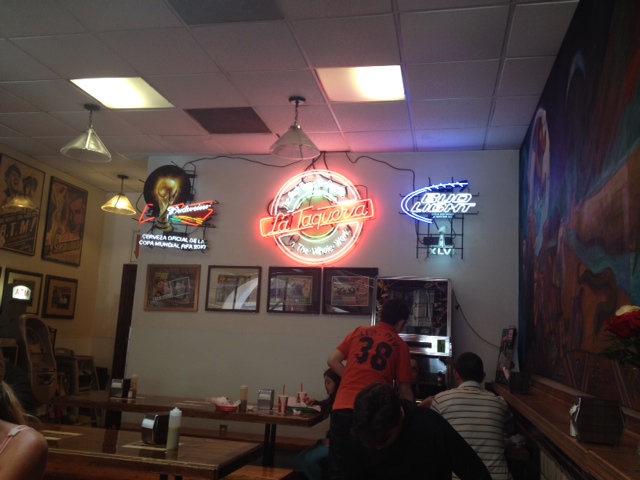
La Taqueria: Best in the world? I think not.

The prosaically named La Taqueria frequently appears on lists of San Francisco’s tastiest budget-friendly eateries. Its carnitas taco ranks at #4 on 7×7’s 2012 Big Eat, the local magazine’s annual checklist of “100 Things to Eat Before You Die.” When you enter the restaurant, you’re greeted by an entire wall plastered with dining awards and honors, in addition to a blazing neon sign that boasts, “The Best Tacos and Burritos in the Whole World.” That’s a lofty standard for the Mission District, home to more taquerias than you can shake your sombrero at. So, we went in with high expectations. Did La Taqueria deliver?

Well… sort of.

The Pirate Queen ordered two tacos, one filled with carne asada and one with chorizo. I mixed things up differently, pairing a carne asada burrito with the highly touted carnitas taco. We shared a basket of chips mounded with the house salsa. All five of our items proved delicious. The meats were uniformly well-cooked, tender, and flavorful. The beans in my burrito were nicely seasoned and boiled whole rather than refried. The chips offered good solid crunch, and the salsa accompanying them tasted fresh and bright.

But I kept looking at that sign, and asking myself, “Is this really the best taco and burrito in the whole world?” Bite after bite, the answer came back, “Not so much.”

Tacos at La Taqueria

I’m not even sure that La Taqueria serves the best tacos and burritos in the Mission, much less the entire planet. They’re good, yes, but not exceptional. In fact, the last burrito I ate in the neighborhood, at El Toro (on Valencia, between 16th and 17th Streets), was at least the equal of my La Taqueria example, and might have been just a skosh better. It was certainly bigger, and perhaps better value for the money. That’s one of the challenges at La Taqueria. Unlike most of their Mission competitors, they only make burritos in a single modest size, which pales in comparison to the deluxe and super options at other taquerias. If you have a decent-sized appetite, you’ll need to add at least an extra taco to your order so you don’t walk away still hungry.

The quality of the fare at La Taqueria is unquestionably high. Little complaints bugged me, though. Both the carnitas and the carne asada contained far too much juice for the amount of meat. While I have no issue with moist meat as opposed to the dry and tough variety, an overabundance of liquid results in limp tortillas and an overall soggy finished product. My burrito and taco both proved too waterlogged to be consumed out of hand, leaving me to poke into them with a flimsy plastic fork. That’s not my ideal taco- or burrito-eating experience.

I had a similar issue with the chips-and-salsa combination. There was absolutely nothing wrong with either element on its own. (I prefer a lighter, less dense tortilla chip, but that’s strictly an individual aesthetic.) However, I’d rather have my salsa served in a separate container, so that I can apply it to individual chips as I dine, thus maintaining chip integrity. La Taqueria dumps the salsa on top of the chips like cheese on a bad ballpark nacho, and achieves the same unfortunate effect — sodden chips that are both difficult to handle and less than pleasant to eat, tasty though they might be.
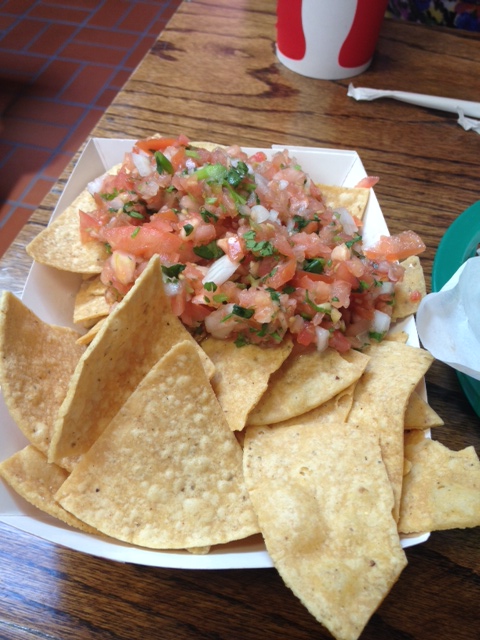
Chips and salsa at La Taqueria

As taquerias go, La Taqueria provides a better than average atmosphere for your culinary pleasure. The walls of the funky dining area are festooned with posters from old Mexican films. I got a chuckle from the visual pun created by the poster for a movie entitled “A.T.M.” mounted immediately above the ATM. The furnishings are simple yet comfortable, and there’s patio seating out front if you care to watch vagrants meandering by as you nosh. Counter service was efficient, if not particularly engaging. Once we placed our order, food was dispensed with lightning quickness.

Clearly, thousands of folks — many of whom paraded in and out of the restaurant during our dining hour — hold La Taqueria in much higher esteem. All of the points I make above are subjective. I certainly enjoyed the flavors of my repast at La Taqueria, and I wouldn’t mind eating there again. With so much nearby competition for my Mexican cuisine dollars, though, I’m sure that I’ll probably find my way into several other joints in the Mission before I circle back around to this one.

On the Uncle Swan scale, La Taqueria rates three tailfeathers out of a possible five. The Pirate Queen, less easily impressed than I, lobbied for two and a half, but I’m in a generous mood. You could certainly do far worse than this if your tastebuds are in a Mexican frame of mind, but I’m equally certain that you could do better, too. If nothing else, it’s an opportunity to check that carnitas taco off your bucket list.

You’ll find La Taqueria at 2889 Mission Street (between 24th and 25th Streets) in San Francisco.

A final sting from the Scorpions

Posted June 11, 2012 by swanshadow
Categories: Celebritiana, Hero of the Day, My Home Town, Soundtrack of My Life, SwanStuff, That's Cool!

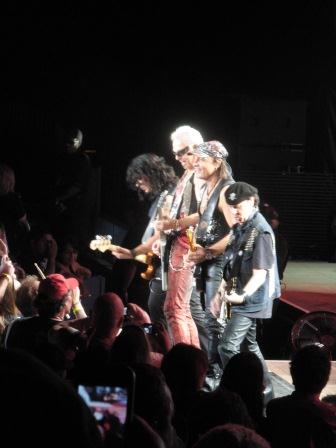
The Scorpions: Klaus Meine, Matthias Jabs, Rudolf Schenker, and Paweł Maciwoda

Let’s get this on the table right now: I wouldn’t describe myself as a huge Scorpions fan. (We’ll leave the issue of whether I would ever describe myself as a “huge” anything for another time.)

Back in my radio days, I always thought of the Scorpions as “that German metal band with the weirdly misogynistic album covers” — i.e., the Scorps’ 1979 release Lovedrive, which depicted a woman with bubblegum stuck to her exposed breast. And, to be bluntly honest, too many of the Scorpions’ lyrics sounded like they were written by someone for whom English wasn’t a primary language… which, come to think of it, is true. I dug a few of their hits — “The Zoo” is a fun, chugging rocker with a catchy hook, “Wind of Change” is as solid a power ballad as the genre allows, and come on, who doesn’t bang his or her head to “Rock You Like a Hurricane”? — but not enough to land the group on my list of top-rated acts. Liked ’em, didn’t love ’em.

When the Pirate Queen mentioned a few months back that one of her favorite bands from the ’80s was coming to town, however, I rallied to the cause.

And so it was that last Saturday evening we made our way down to Mountain View’s Shoreline Amphitheatre — or as I prefer to call it, Le Grande Brassiere — to check out the Scorpions on their final pre-retirement tour. (Considering that Scorpions lead singer Klaus Meine turned 64 last month, and the band’s founder and guitarist Rudolf Schenker will join him at that age in August… yeah, it’s probably about time to hang ’em up.) The Pirate Queen had been ill for several days with a nasty cold, but as she put it, “Either you or I would have to be on our death bed for me to miss the Scorpions… and if it were you, I’d see if someone could watch you for a few hours.” (She was kidding. I think.)

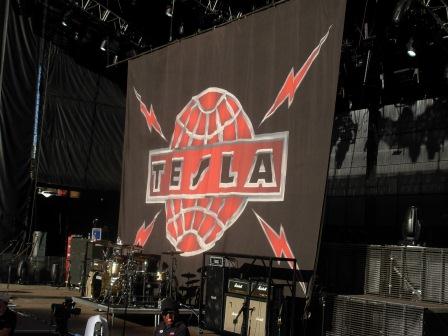
The show kicked off with Tesla, the hard-rocking Sacramento quintet who’d opened for the Scorpions on their 2004 U.S. tour. (I gleaned this factoid from the back of a passing T-shirt.)

Tesla: Let's get uncoiled.

A talented act who’ve knocked around the circuit for nearly 30 years, Tesla’s repertoire boasts a total of two hit records — a power ballad with the astoundingly original title “Love Song,” which climbed into the Billboard Top 10 back in 1989, and a cover of the Five Man Electrical Band’s 1960s classic, “Signs.” The band served up their duo of familiar tunes, surrounded by plenty of perfectly serviceable filler, during an entertaining hour-long set.

Tesla guitarist Frank Hannon

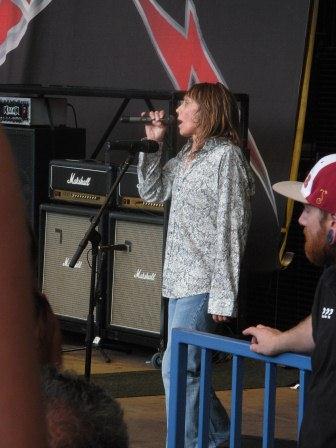
To Tesla’s credit, their performance held my interest throughout, even though I couldn’t have named more than the aforementioned two songs. Lead singer Jeff Keith probably had better voice back in the day than he displayed on this particular night, but his cigarettes-and-whiskey rasp was more than enough to do the job. (I don’t know whether Keith either smokes or drinks, but if he doesn’t, he might as well. He already sounds as though he’s pounding down a fifth of Jack Daniel’s and two packs of Marlboros daily.) I was highly impressed with Tesla’s guitar combination of Frank Hannon — who worked much of his fretboard magic on a double-necked Gibson — and Dave Rude; I’d gladly pay to hear these two gents rip it up anytime.

I’ll award Tesla’s Saturday show two-and-a-half tailfeathers on the Uncle Swan scale of a possible five. They get docked a half for Jeff Keith’s wearing of the ugliest shirt I’ve seen on a rock concert stage in 35 years.

Tesla lead vocalist Jeff Keith: Dude, what's up with that shirt?

When the Scorpions took the stage (after nearly an hour of technical set-up), I could tell immediately that we were in for a fun evening. From the thunderous opening riff of “Sting in the Tail,” the title track of the band’s final all-original studio album, the Deutschland destroyers grabbed the audience by the throat and never let up.

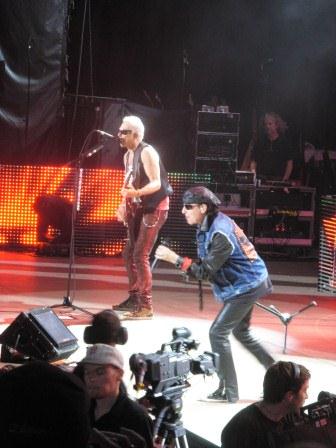
Scorpions Rudolf Schenker and Klaus Meine

Klaus Meine displayed a remarkably powerful voice for a man of his advanced years — I’m sure that a couple of the high notes soared a half-tone or so higher in decades past, but all in all, the diminutive vocalist (who reminded me of the late Ronnie James Dio, another powerhouse instrument packed into an impossibly tiny frame) sounded about as incredible as he did on any of the Scorpions’ albums.

Scorpions lead vocalist Klaus Meine: He looks bigger on screen.

Meine’s vocals surfed above a sonic tsunami generated by one of the tightest — and unquestionably loudest — ensembles I’ve seen in a while. The Scorpions have always boasted a guitar tandem among the best in rock, starting from the band’s origins, when rhythm guitarist Rudolf Schenker played alongside his brother Michael, one of the most capable artists in the history of the instrument, to Uli Jon Roth, who replaced Michael on the Scorpions’ early albums and helped create the band’s signature sound. Rudolf hasn’t lost a step that my ears could detect, and lead guitarist Matthias Jabs — who joined the band in the late ’70s, just before the hits started coming — continues his dominant presence as the Scorpions’ melodic engineer. (It’s no accident that the Scorpions transitioned from metal legends to mainstream rock superstars when Jabs entered the fray.) Among the fastest fretmen in the game, Jabs blasted out one scorching cascade after another before taking the spotlight near the end of the set for a blistering extended solo (dubbed “Six String Sting” on the setlist) that would have made many of his fellow guitarists lay down their weapons in homage.

Scorpions lead guitarist Matthias Jabs: He be jabbin'.

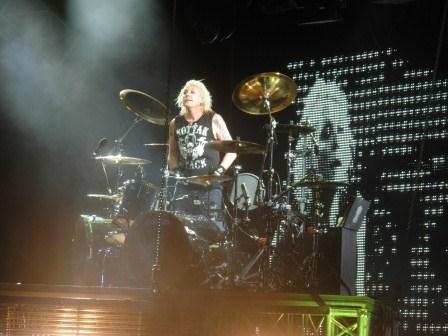
Not to be outdone, drummer James Kottak kept the fire burning all night, combining powerhouse bass drum kicks with flashy stickwork across his kit, perched on a moveable riser that at times towered 20 feet above his colleagues. The lone American in the band, Kottak also added background vocals on several numbers while never missing a beat. His “Kottak Attack” solo featured his own customized music video — starring the drummer himself in a surrealistic parody of several of the Scorpions’ album covers — that brought down the house.

Scorpions drummer James Kottak: Attacking.

The Scorpions’ farewell tour setlist compiles most of their chart-making hits, including “Send Me an Angel,” “Holiday,” “Tease Me Please Me,” my favorite “The Zoo,” and the set-closing “Big City Nights,” while adding a sprinkling of more recent works, such as “Raised on Rock” and “The Best is Yet to Come.” (Interestingly, the show contained not a single number from their first five albums, a.k.a. the pre-Matthias Jabs years.) The band saved three of its biggest crowd-pleasers — “Still Loving You,” “No One Like You,” and of course, “Rock You Like a Hurricane” — for the no-surprises encore.

Scorpions: One final sting before retirement.

Uncle Swan gives the Scorpions a well-earned four tailfeathers out of five, and wishes them well in retirement. Assuming, of course, that they actually retire. Old rock bands never seem to truly go away, even when it’s time… just ask the Rolling Stones.

One final question, though… are there really scorpions in Germany?

Our Hawaiian honeymoon: Day one

Posted June 8, 2012 by swanshadow
Categories: Hawaii, Reminiscing, SwanStuff, That's Cool!, Where in the World is Uncle Swan?

Some of you have been clamoring for information about our little Hawaiian excursion. Well, for that subset of this rowdy crowd, this is your lucky day. That is, the first of your lucky days. This is going to take a few posts.

Our adventure began in the predawn hours of a chilly San Francisco morning… but I repeat myself. After being ferried to SFO by an upstanding member of the taxi-driving fraternity Hakka Cabba Dei, and thorough cavity searches performed by the ever-charming staff of the Transportation Security Administration, the Pirate Queen and I boarded a spacious Hawaiian Airlines Airbus and winged our way across the Pacific – a third of the way across the Pacific, at any rate – for the Land of Aloha.

With our suitcases crammed into the rear of our rented Toyota, we traversed the traffic-choked streets of Honolulu toward our Waikiki hotel. That’s far less easy than it sounds, because Honolulu currently holds the title of Gridlock Capital of America. Seriously – you can look it up. Driving in Hawaii’s largest city – okay, Hawaii’s only large city – involves navigating excruciatingly narrow roadways laid out with the organizational linearity of a bowl of spaghetti in the company of nearly a million people in no great hurry to get anywhere. Factor in the presence of tens of thousands of clueless tourists buzzing about blindly at the mercy of GPS or wandering blithely across intersections in flagrant violation of traffic signals, and you’ve got a prescription for automotive apocalypse.

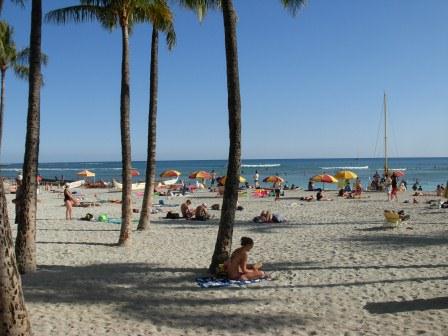
But we got there: Waikiki Beach, U.S.A.

Waikiki Beach... you know you want to be there.

Upon our arrival at our hotel, we found ourselves confronted with a conundrum: What to do with our fine rental vehicle? The entrance to what appeared to be the parking area was rendered inaccessible by a massive delivery truck dropping off the day’s linens. We could spot no valet to whom we could hand over the keys. After several circuits of the crazily designed block, complicated both by one-way streets and hordes of fellow visitors, the Pirate Queen bailed out to seek aid in the hotel lobby while I sat in the blazing sun praying that the local gendarmerie didn’t happen by and cite me for double-parking. Eventually, the Pirate Queen returned with two fresh-faced young chaps, one of whom cheerily loaded our belongings onto a cart while his compatriot whisked the Toyota away for safekeeping. (Or joyriding. We didn’t really know at that point.)

Despite those frustrating first few moments, Hotel Renew turned out to be an excellent choice of lodging for our purposes. Located near the south end of Waikiki Beach, it’s far enough away from the major portion of attractions to be reasonably quiet – except for first thing in the morning, when the garbage trucks come clattering through the block – yet close enough to the beach that one can be sprawled on the world-famous sand after a mere two-minute stroll from the front door.

Hotel Renew... stay here, and get all renewed and stuff.

The Japanese-influenced décor, all straight angles and darkly painted wood, makes a soothing change from the typical chain hotel, and the staff is uniformly friendly and polite, if not always as Johnny-on-the-spot as they might be. The Pirate Queen, who’s known to be fussy about where she sleeps, found the bed and bathroom to her liking, while I was relieved to discover the in-room safe capacious enough for my mammoth laptop as well as all of our other valuables. All in all, we were glad we selected it.

Having settled into our accommodations, we launched ourselves on a leisurely promenade along Kalakaua Avenue, the street that traverses the tourist district. It had been 23 years since my last trip to Waikiki, and as KJ was heavily pregnant at the time, we didn’t do much extended walking. But I remembered traveling this stretch, and I was surprised both at what had changed in three decades and at what remained pretty much the same.

Waikiki Beach... smell the coconut oil on the sunbathing tourists.

What hadn’t changed:

An ABC Store on every corner, and sometimes two or three within a block. For the uninitiated, the ubiquitous ABC Store is Hawaii’s native mash-up of convenience store and touristy gift shop, and they are almost literally everywhere. I kept expecting to walk into a public restroom only to discover that they’d put an ABC Store in one of the toilet stalls.

This weird tree. This ginormous banyan should be transplanted to the grounds of Hogwarts. It’s freakin’ creepy. Albeit in a cool way.

Chinese music under banyan tree, here at the dude ranch across the sea

The crowds. We actually visited during one of Hawaii’s least jam-packed windows – the fallow period between the end of spring break in April and the start of summer travel season on Memorial Day weekend. But even in a traditional down time, Waikiki attracts tons of guests.

The International Marketplace. Imagine every cheesy jewelry, T-shirt, and souvenir shop in every tourist trap in America crammed into a colorful labyrinth of carts, stalls, and stands that winds along seemingly forever, and you’ll get the general picture of the International Marketplace. No wallet is safe.

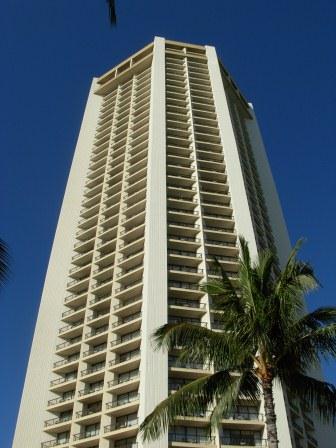
Tall buildings. Did you know that Honolulu has more skyscrapers than any American city outside of New York, Los Angeles, and Chicago? Just a tidbit of architectural trivia from your Uncle Swan.

This is a tall building. In case that wasn't obvious.

What was new:

Panhandlers. Having lived around, and now in, San Francisco – Mecca for America’s down and out – for 35 years, I’m no stranger to homeless people cadging change on street corners. I was startled, however, to see so many mendicants on the sidewalks of Waikiki. I understand how so many homeless folks get to The City; Greyhound offers a dirt-cheap bus ride from almost anywhere in the contiguous United States. But if you’re flat broke, how the heck do you get to Hawaii? I’ll say this, though — if you have to sleep outdoors, better to do it in balmy Honolulu than in the Arctic chill of San Francisco.

Upscale shopping. The spending experience along Waikiki has always been pricey, but it used to feature much more local flavor. It’s kicked up several notches now with the presence of numerous internationally renowned high-end retail stores. I’m guessing this marketing strategy must be successful, but I question the logic. Does anyone really come to a tropical beach town to buy a Coach bag or a Rolex?

Insane traffic. I mentioned this earlier, but it warrants repeating. Honolulu totally sucks if you’re behind the wheel of a car. I don’t remember it being anywhere nearly this wretched in decades past.

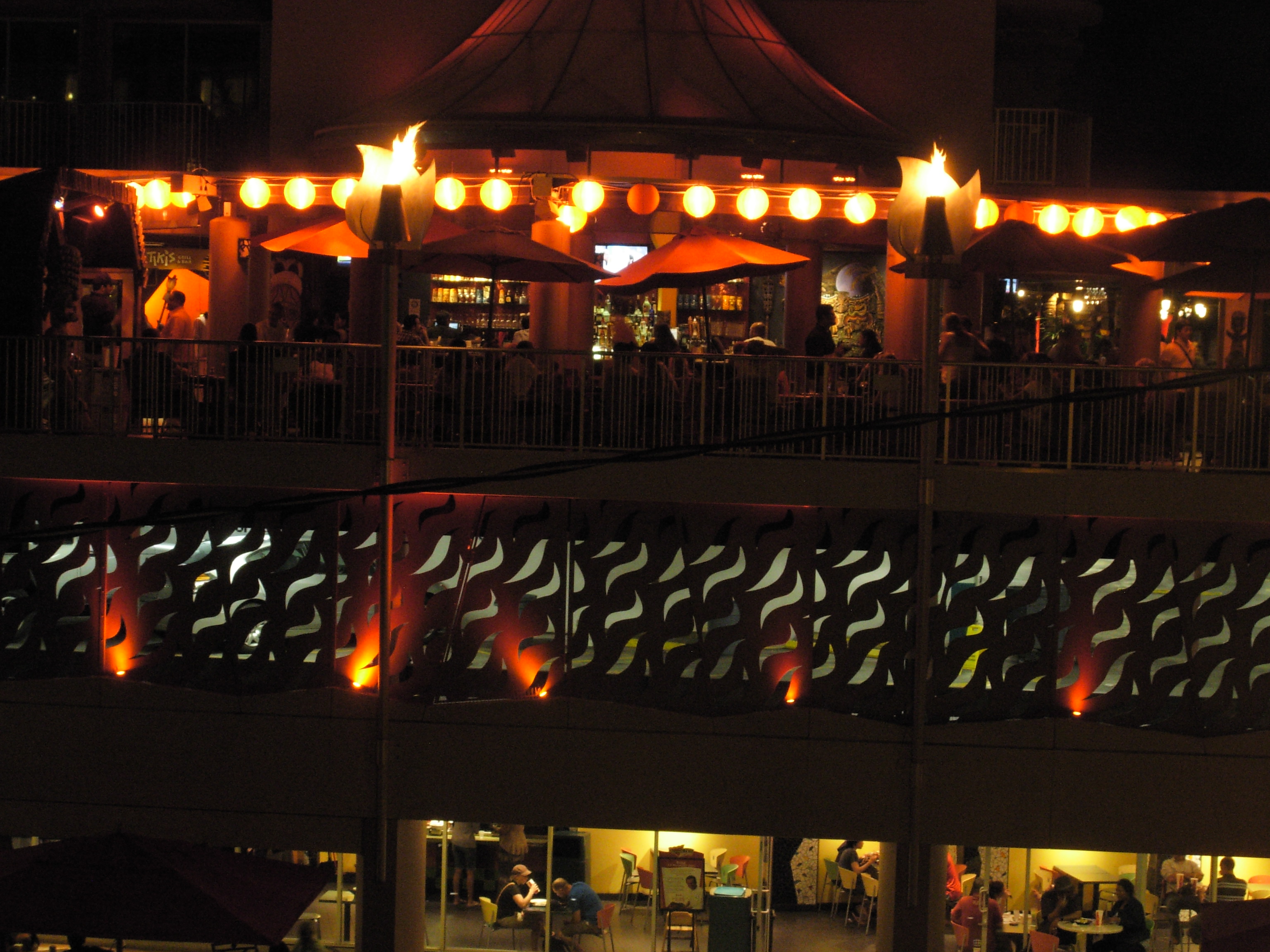
Tiki's Grill and Bar: Be sure to tip your waiter.

We consumed our first Hawaiian repast at a restaurant called Tiki’s Grill and Bar, conveniently located on the third floor of the hotel right next door to ours. The place features an extensive menu of vaguely tropical themed cuisine, most of which was reasonably tasty; a killer view of the Waikiki sunset; live music in the evenings – Honolulu is the universal nexus of lame cover tunes performed on public stages by guys wearing aloha shirts – and yes, oodles and oodles of tikis. A roving photographer snapped our photo (which we were able to purchase for a nominal fee, because there ain’t no such thing as a free lunch in Hawaii) to commemorate the event.

And that was our first day on Oahu. I’ll tell you about our second day in my next post.

Sunset on Waikiki Beach. Just say "ahhhhh."

San Francisco Restaurant Resolution: Week One — Bissap Baobab

Posted June 4, 2012 by swanshadow
Categories: Food Glorious Food, Listology, My Home Town, San Francisco Restaurant Resolution, SwanStuff, That's Cool!

Shortly before our wedding, the Pirate Queen and I discussed measures we could take to maintain the fun and newness of our courtship as we entered our Spousal Unit phase. (Frankly, we feared falling into a rut over time, as many couples do.) We thought about the activities we most enjoyed together as we were dating, one of which was exploring interesting new dining options. Given that we’re fortunate to live in one of the greatest foodie destinations in the world, there’s no reason to confine ourselves to the same old joints… as excellent as some of those old joints may be.

So, we made a pact: Every weekend between now and Labor Day, we’ll challenge our palates with a San Francisco restaurant that neither of us has patronized previously. By the end of the summer, we’ll have discovered at least fourteen new places to eat — some of which, we hope, might work themselves into our list of go-to spots.

This past weekend, we began our culinary journey at Bissap Baobab, a Senegalese restaurant in the Mission. (The signage on the building reads “Little Baobab.” Apparently, the restaurant under that name merged with another establishment nearby, called Bissap. If you look for reviews on Yelp, either the old name or the new will get you to the correct page.) Although both the Pirate Queen and I have traveled — and dined — internationally, neither of us had sampled Senegalese cuisine. Truth to tell, before arriving at Bissap Baobab, I wasn’t aware that Senegal had its own unique cuisine. But then, that’s one reason we’re undertaking this experiment — to learn about unfamiliar cuisines.

As it turns out, those Senegalese know a thing or two about food. We began our repast with two appetizers: aloko (fried plantains accompanied by a tangy yogurt-based sauce), and prawns swathed in a spicy red curry. I liked the plantains more than did the Pirate Queen — as you’ll doubtless deduce as you read this and future posts on this topic, she’s not partial to sweets — but we both agreed that the curry prawns were a hit. The sauce was pungent, but not overly intense, and with surprising levels of flavor. The shrimp themselves were slightly overdone, but not rubbery. (Shrimp may be the most difficult protein to cook perfectly. No, I take that back — octopus and squid are even trickier.)

The Bissap Baobab menu includes only five or six entrees, most of which consist of a basic sauce to which a selection of meats (or tofu, for you vegetarian types) can be added. Depending on the sauce, the meat options range from lamb or chicken to fish (tilapia, mostly) or prawns. All entrees can be accompanied with either rice or couscous. The Pirate Queen chose the yassa (a rich, mustard and onion-based sauce) with lamb, and enjoyed it thoroughly. My entree, called coco, consisted of a tilapia fillet grilled on skewers, then layered with a slightly sweet coconut-onion sauce and sliced potatoes. The fish was expertly cooked, and the well-balanced sauce made a perfect match.

We found the flavor profiles surprising and memorable. I expected something similar to either Moroccan or Ethiopian cuisine — two styles of cooking with which I’m quite familiar. Instead, Bissap Baobab’s food reminded me more of both Caribbean (which made sense, given the West African heritage of many Caribbean residents) and Indian cuisine, the latter of which came out of left field. The unique combination of spices, aromatics, and other ingredients is distinctive and very appealing, and I’ll look forward to other opportunities to expand my connection with this wonderful regional style.

As for the restaurant experience beyond the food itself: Like many restaurants here in The City, Bissap Baobab suffers from complications of space, or lack thereof. We were shoehorned into a corner in which our table wedged cheek-by-jowl with three other small tables, two of which were occupied by other diners. The staff, to their credit, figured out quickly that the arrangement was too cramped, and removed the unoccupied table to create breathing room between the three that remained. Aside from this minor snafu, we enjoyed our visit. Our waitperson offered friendly, helpful explanations of both the dishes and the drink menu, and answered all of our questions with a smile. Food arrived at our table with reasonable promptness, though we did have to wait a stretch to settle our check at the end of the meal. The interior of the space is decorated with bright, hand-painted murals that lend the ambiance a vibrant energy.

Uncle Swan gives Bissap Baobab a solid three-and-one-half tailfeathers out of a possible five. If you’d like to try a regional cuisine that offers some savory surprises, check out the Senegalese fare at Bissap Baobab the next time you cruise the Mission. (A bit of trivia: Bissap is the hibiscus flower; baobab is a fruit tree also called monkey bread.)

You’ll find Bissap Baobab at 3388 19th Street (between Mission and Capp) in San Francisco’s Mission neighborhood.

Comic Art Friday: Remembering Ernie Chan

Posted June 1, 2012 by swanshadow
Categories: Comic Art Friday, Dead People Got No Reason to Live, Hero of the Day, SwanStuff, That's Cool!

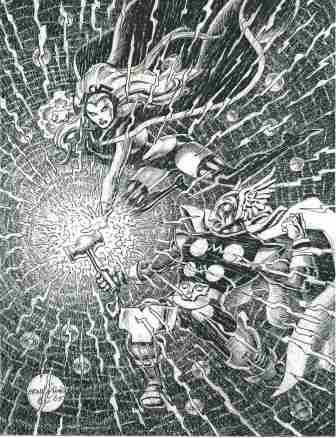
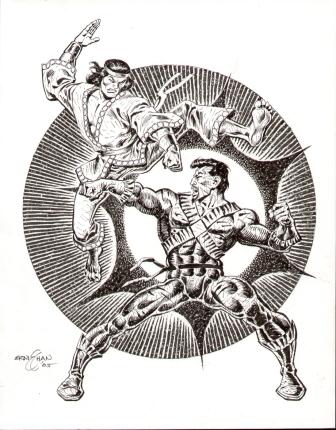
While we were off gallivanting about the Hawaiian islands (more on that sojourn to follow), I received the sad (and to me, unexpected) news of the passing of comics artist Ernie Chan. Coming so closely on the heels of two other tremendous losses from among my personal favorites in the comic art field — specifically, Al Rio and Tony DeZuniga — Ernie’s death came as an especially great shock.

Storm and Beta Ray Bill, pencils and inks by comics artist Ernie Chan

In an industry often characterized by enormous egos and self-important personalities, Ernie Chan was one of the nicest, least pompous creators I’ve ever met. His smiling face and easygoing demeanor were indelible highlights of the comics conventions I attended over the years. I always looked forward seeing and chatting with Ernie — and of course, adding a new piece of his artwork to my collection.

Shang-Chi and the Bronze Tiger, pencils and inks by comics artist Ernie Chan

Ernie was among the dozen or so talented artists who joined the American comics industry from the Philippines in the early 1970s, under the pioneering leadership of Tony DeZuniga. Quickly, Ernie established himself as a two-way star, both as a penciler and inker. In the former capacity, he shone as DC Comics’ busiest cover artist during the mid-’70s, frequently signing his work “Ernie Chua” (a misspelling on his immigration paperwork). At Marvel, Ernie gained acclaim as inker on Conan the Barbarian, over the pencils of the legendary Big John Buscema. Ernie would revisit Robert E. Howard’s Cimmerian warrior in hundreds of drawings and commissions, including the Common Elements teamup with Iron Man he’s holding in this photo I took at WonderCon 2011.

Ernie Chan at WonderCon 2011

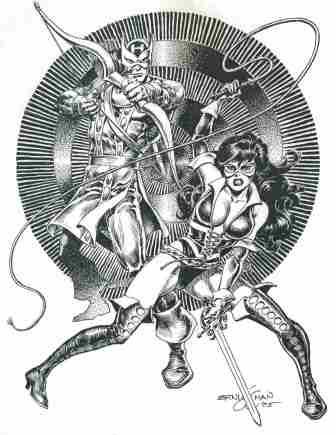
I frequently referred to Ernie as the Amazing Chan for his speed in delivering commissioned art. On more than one occasion, Ernie completed a fully penciled and inked piece for me in less than a day — not a convention sketch, mind you, but a detailed, cover-quality illustration completed in his home studio. Once, he sent me a scan of a finished Common Elements commission — this one, featuring Hawkeye and Lady Rawhide — before I knew that he’d even accepted the job. Now that’s fast.

Hawkeye and Lady Rawhide, pencils and inks by comics artist Ernie Chan

I’ll miss Ernie’s lively humor and fun-loving personality as much as I’ll miss seeing new creations spring from his potent pencils and pens. He was always a hoot to chat with, engaging to his fans, and with an inerrant eye for feminine pulchritude.

Rest in peace. Mr. Chan.

And that’s your Comic Art Friday.

Comic Art Friday: Avengers assemble!

Posted May 4, 2012 by swanshadow
Categories: Cinemania, Comic Art Friday, Hero of the Day, Ripped From the Headlines, SwanStuff, That's Cool!

Unless you’ve been living in an underwater grotto for the past year or so, you know what today is: the U.S. premiere of Marvel Studios’ summer blockbuster, The Avengers. (Also known as Avengers Assemble, if you happen to live in the U.K. In which case, you already saw the movie a week ago.) While I didn’t feel compelled to queue up for a midnight showing, I do have the flick on my weekend to-do list.

In the meantime, I thought it would be fun to revisit a few pieces from my galleries featuring the heroes from the film’s roster of Avengers. It’s a much shorter list than the slate of current and past Avengers in the Marvel Comics universe, which, the last time I counted, has included more than 80 heroes and heroines over the superteam’s half-century of history.

Interestingly, there’s never been an incarnation of Avengers in the comics that included the movie’s Big Six — Captain America, Iron Man, Thor, Black Widow, Hawkeye, and the Hulk — at the same time. The Hulk, a founding member of the team, ditched the others by the second issue of the original run. He made guest appearances in a couple more early stories, but was gone entirely by issue #6. To the best of my knowledge, ol’ Greenskin hasn’t been an active Avenger at any time since early 1964, a year before Hawkeye signed on, and nearly a decade before the Widow became a permanent member.

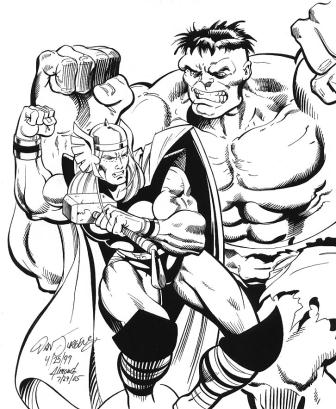
Let’s start with one of the first drawings I acquired when I began collecting original art. Thor faces off with his not-so-jolly green compadre in this scene penciled by Dan Jurgens and inked by Bob Almond.

Thor vs. the Hulk, pencils by Dan Jurgens, inks by Bob Almond

Next up, here’s the Incredible One again, this time doing battle with yet another fellow founding Avenger, Iron Man. The late, great George Tuska — the definitive Iron Man artist of the 1970s — lent his potent pencil and imagination to this one.

Iron Man vs. the Hulk, pencils by George Tuska

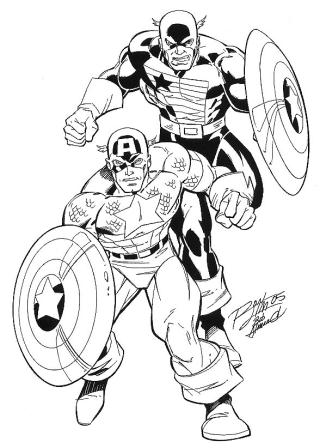
People who don’t follow comics closely might assume that Captain America was an original Avenger, so identified is he with the team. In fact, Cap didn’t join until Avengers #4 — he was busy being frozen in ice prior to that. No sooner had the Star-Spangled Super-Soldier thawed out, though, that he became the heart and soul of the ever-changing ensemble, assuming his longtime leadership role in Avengers #16 when the remaining founding members — Iron Man, Thor, Ant-Man (who’d changed his code name to Giant-Man by then), and the Wasp — departed en masse. Cap’s been the center of the Avengers most of the time since. Here he is with his doppelganger and one-time fellow Avenger, the U.S. Agent (or USAgent, if you prefer), as drawn by Ron Lim and embellished by Bob Almond.

Captain America and the U.S. Agent, pencils by Ron Lim, inks by Bob Almond

The Black Widow didn’t become a full-fledged Avenger until 1973, though she made periodic guest shots before then. At the time she joined the team, the Widow was probably best known as the partner (both in and out of costume) of the blind crimefighter Daredevil, whose comic she co-headlined for four years. Readers of a certain age, however, will recall that before she settled in with the Man Without Fear, the spy formerly known as Natasha Romanoff starred in her own year-long series in Marvel’s Amazing Adventures in 1970 and ’71. In this Common Elements commission by Ty Romsa, the Widow chills with Silver Sable, one of the very few Marvel heroes who has never been an Avenger. (At least, not yet.)

Silver Sable and Black Widow, pencils by Ty Romsa

Alas, I don’t have a solo drawing of Hawkeye in my collection. Which surprises me, because I’ve always liked the guy. (I’m tempted to throw up my Mike Grell Green Arrow instead, just to see whether anyone would even notice the difference.) He does, however, make an appearance in my Common Elements series, in a terrific piece drawn by the legendary Ernie Chan.

Go see The Avengers. But wait a day or two until the crowds thin out. It’ll still be the same movie, but you’ll be able to get a better seat.

And that’s your Comic Art Friday.

Comic Art Friday: Tony DeZuniga needs your help!

Posted April 27, 2012 by swanshadow
Categories: Comic Art Friday, Hero of the Day, Ripped From the Headlines, SwanStuff, That's Cool!

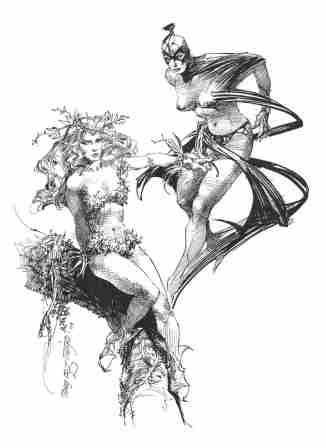
I was deeply saddened recently to hear of the dire health circumstances faced by one of my favorite comics artists of all time: the legendary Tony DeZuniga, co-creator of the DC Comics characters Jonah Hex (don’t blame Tony for the abominable movie) and Black Orchid.

Black Orchid and Poison Ivy, pencils by comics artist Tony DeZuniga

Tony suffered a stroke earlier this month in his native Philippines, since which time he has been hospitalized and breathing via a ventilator. He has at least partial paralysis, as well as other complications that frequently accompany a major stroke. Fortunately, the latest report from Tony’s wife Tina indicates that he is starting to show improvement, and may be disconnected from the ventilator with the next few days.

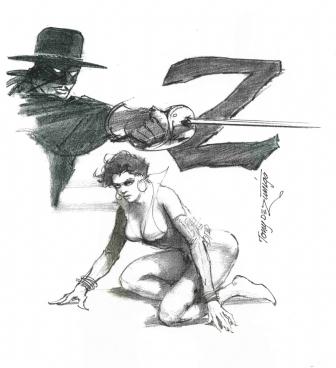
Zorro and Vixen, pencils by comics artist Tony DeZuniga

It’s hard to overstate the impact that Tony had on the comics industry, despite not being a household name on the level of Stan Lee or Jack Kirby. Tony was the first artist from the Philippines to be hired by either of the Big Two comics publishers. Rather than simply being satisfied with his own success, Tony facilitated the debut of numerous other Filipino artists into the American comics mainstream by persuading DC’s then-editor-in-chief Carmine Infantino to undertake a recruiting trip to the Philippines. As a result of Tony’s efforts, American comics readers enjoyed the work of such talents as Ernie Chan, Alex Nino, Alfredo Alcala, Nestor Redondo, Gerry Talaoc, Romeo Tanghal, and many others.

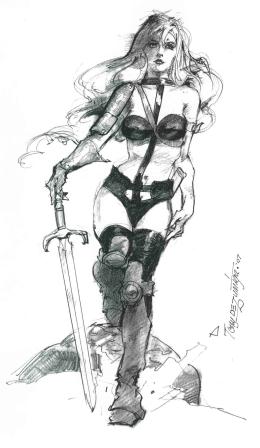
Taarna, pencils by comics artist Tony DeZuniga

Having had the chance to get to know Tony and Tina DeZuniga at comics conventions over the past several years, I can attest to their generosity and kindness firsthand. You’re looking at a few of the amazing artworks that I’ve commissioned from Tony, demonstrating the level of creative brilliance he maintained before his recent setbacks. The greatest testimony to Tony’s genius is the fact that it’s his pieces other artists always admire when I break out my portfolio at a con. Hardly a con weekend goes by that another artist doesn’t ask to “see what Tony drew.”

Black Panther, pencils by comics artist Tony DeZuniga

Like most freelance artists, Tony doesn’t have health insurance to offset his medical expenses. Superstar artist Neal Adams and others are spearheading a fundraising drive for Tony and Tina. I understand that the DeZunigas are also receiving assistance from the Hero Initiative, the nonprofit charitable organization that helps comics creators in need. (I’ve been a proud member of the Hero Initiative since I first learned about it. Anyone who grew up loving comics, as I did, should consider supporting this group that does so much good for the folks whose talents enlightened our childhoods.)

Arak and Valda, pencils by comics artist Tony DeZuniga

Like dozens of other comics fans and industry insiders, I’ve contributed what I could share. If you’d like to chip in, you can direct funds to Tony’s PayPal account: tonydezuniga@yahoo.com. The account is managed by Tony’s daughter, Cheryll Lim. Whatever amount you can offer will help, and will be sincerely appreciated by the DeZuniga family. (I received two lovely notes from Tina thanking me for my gift.) I know that times are tough for a lot of folks these days, but if you have a few uncommitted simoleons that you can donate, please be assured that Tony is well deserving of whatever help you can give.

And that’s your Comic Art Friday.

Comic Art Friday: Skulduggery

Posted April 20, 2012 by swanshadow
Categories: Comic Art Friday, SwanStuff, That's Cool!

I know we just did a riff on Cloak and Dagger not too long ago, but you know how it is in comics — the same tropes keep popping up again and again.

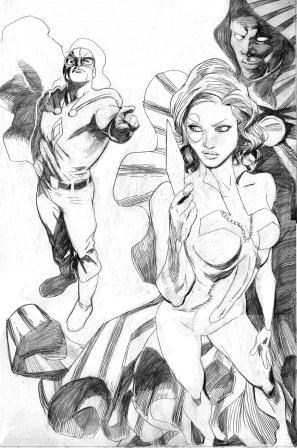
Spy Smasher and Cloak and Dagger, pencils by comics artist Eric Koda

In this Common Elements tableau drawn by the talented Eric Koda, our hero and heroine find themselves confronted by Spy Smasher, a classic stalwart from that thrilling Golden Age of yesteryear. (For those of you who are new here, Common Elements is my series of original commissioned artworks, bringing together unrelated comics characters who share some feature in, well, common.)

Although he’s fallen into relative obscurity now, Spy Smasher was quite a popular hero back in the day — popular enough that Republic Pictures produced a well-received film serial featuring the character. Spy Smasher made his debut in Fawcett Publications’ Whiz Comics #2, the very same issue which presented the premiere of an even more popular hero: the original Captain Marvel.

Like the good Captain, Spy Smasher sprang from the collective imaginations of writer Bill Parker and artist C.C. Beck. Unlike the Captain, Spy Smasher possessed no superhuman or magical abilities. He was simply a skilled investigator named Alan Armstrong, who employed a variety of high-tech tools to track down and thwart covert enemies of the United States of America. (His trademark weapon was a fantastical vehicle called the Gyrosub, which combined the features of a submarine, an airplane, and a car.) You might think of Spy Smasher as a less-bizarre Batman, with a slightly narrower career focus. During the post-World War II years, Spy Smasher changed his code name to Crime Smasher, and broadened his attack to include nefarious ne’er-do-wells of every stripe, not just spies.

When DC Comics bought the rights to the former Fawcett characters in the early 1970s, Spy Smasher began popping up occasionally in stories featuring Earth-S, the alternate Earth where the Fawcett heroes resided before the Crisis on Infinite Earths maxiseries merged all of the Multiverse worlds into one. His most prominent appearances came in the Captain Marvel series, The Power of Shazam. This series depicted Alan Armstrong as a retired hero who befriended Billy and Mary Batson, the alter egos of Captain Marvel and Mary Marvel, respectively.

Because modern comics publishers can never leave well enough alone, there’s now a modernized version of Spy Smasher running around in the DC Universe. The latest edition is a young woman named Katarina Armstrong — I’m not certain, but I’m guessing that she’s Alan’s granddaughter — whose creator, writer Gail Simone, describes her as a sort of female Jack Bauer, the antiterrorist operative portrayed by Kiefer Sutherland in the late, great TV series 24. Katarina mostly hangs out with the distaff crimefighting team Birds of Prey.

Back at last to our featured artwork. It’s easy to understand how a guy who’s looking for spies everywhere might be thrown off by the nomenclature of a team calling themselves Cloak and Dagger. He may, however, be in over his head in this instance. I love Eric Koda’s figure work in this drawing, as well as the personalities with which he imbues his characters.

And that’s your Comic Art Friday.

Comic Art Friday: Children of the atom

Posted March 23, 2012 by swanshadow
Categories: Comic Art Friday, SwanStuff, Taking Umbrage, That's Cool!

I’ll get to the subject at hand momentarily, but first, I’m going to vent just a tad. (If you wish to avoid my angst-ridden screed, feel welcome to scroll down to the big picture, and start reading beneath it.)

Usually, around this time of year, I spend a joyous and fun-filled weekend at WonderCon, here in San Francisco. As many of you know, Comic-Con International — presenters of both WonderCon and the industry’s biggest annual event, San Diego Comic-Con — moved WonderCon 2012 from the Moscone Center (which is currently undergoing renovation) to Anaheim Convention Center, 400 miles to the south. I have been vocal, both online and in person among my comics-aficionado associates, in contending that this move was (a) unnecessary, as there are other facilities in the Bay Area to which WonderCon could have been relocated for one year; and (b) permanent, because the real reason CCI moved the con to Anaheim in the first place is to get the event into a larger, more lucrative media market — especially one closer to the hub of the motion picture/television/video gaming industry, toward which CCI’s events have become increasingly geared.

I’ve told anyone who’d listen over the past several months since the move was announced that I believe CCI will keep WonderCon in SoCal from here on out. I’ve heard nothing from CCI’s leadership that contradicts that view. In fact, the rather vague assertions of CCI’s spokespeople to the effect that, “Well, we’d like to keep WonderCon in San Francisco, but gee, we don’t know what’s going to happen…” have only served to reinforce my perspective.

So, earlier this week, when the popular comics news blog The Beat published its latest article promoting the CCI party line, I dropped in the following comment:

Believe the misdirection ploy (“It’s everyone else’s fault”) if you choose. The bottom line is that this is about money, pure and simple. [CCI head David] Glanzer and his crew think there’s more money in relocating WonderCon to SoCal. Every other excuse is a canard.

Maybe they’re right. But SoCal already has SDCC. Now, thanks to abject greed, it has our Bay Area con, too.

If Glanzer was sincere about keeping WonderCon in the Bay Area, there were and are several alternatives.

And, if he were sincere now, all it would take is an unequivocal statement: “WonderCon will be held in the Bay Area in 2013, and in the foreseeable future. If the Moscone Center doesn’t work out, we’ll stage it at another Bay Area venue. Period. End of conversation.”

But he won’t. He’s too busy counting those SoCal dollars.

I guess the thousands I’ve spent at WonderCon over the years — along with the millions spent by countless other Bay Area and Northern California fans — just don’t smell as sweet.

Having apparently offended the delicate sensibilities of The Beat‘s editor-in-chief, Heidi MacDonald, I was promptly placed on moderation and told that my comments were “insulting.” Never mind, of course, whether they’re accurate.

I recognize that CCI is a major advertiser on The Beat — you can’t go to the site without seeing a huge banner ad for CCI’s upcoming events. So, I understand that Heidi’s simply protecting that revenue stream, as well as her sources for information and stories from within the CCI organization. I totally get it.

But if you still think this isn’t about money, take note of what happens when you try to speak truth to power.

Now that I have that out of my system, let’s look at today’s featured artwork, shall we?

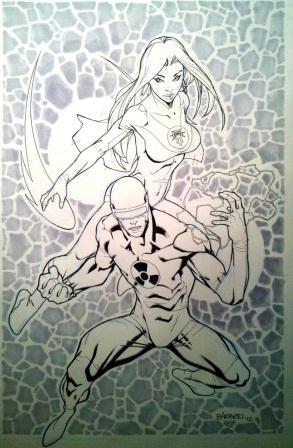
Atom Eve and Doctor Solar, pencils and inks by comics artist Carlo Barberi

When we think of comics today — to be more narrowly specific, superhero comics — we’re often thinking in terms of the Big Two publishers of such fare: Marvel Comics (now an arm of the Walt Disney Company) and DC Comics (owned for the past few decades by Warner Bros., a division of Time Warner). Several other entities — including Image, Dark Horse, and Dynamic Entertainment — also put out superhero and related science fiction and fantasy comics, but with a far smaller footprint in the marketplace.

Although DC and Marvel have dominated the field since the early 1960s (both companies, of course, trace their histories back much further in time than that, all the way to the late 1930s), they’ve always had competitors, even as they do at present. In fact, when I was a comics-reading kid in the mid-to-late 1960s, I regularly picked up books published by Charlton, Tower, Dell, and Western Publishing (which issued its comics under the Gold Key imprint), among others. All of these minor (relatively speaking) players have faded from the scene over time, but many of their characters live on in the memories of fans — and occasionally, in licensed revivals by publishers active in the business today.

Which brings us to Doctor Solar. (That’s him sporting the wicked-looking visor in the drawing above. Credit the talented Carlo Barberi with the pencils and inks.)

Doctor Solar, Man of the Atom, first published in 1962, was one of Western/Gold Key’s more successful superhero ventures. Its lead character, Dr. Raymond Solar (a name born for superhero-dom), was a nuclear physicist who gained his superpowers from a reactor meltdown. (Radiation-spawned abilities were all the rage in the early 1960s — see Spider-Man, the Fantastic Four, and the Hulk, to name but a few.) The newly irradiated Solar could transform himself into all kinds of energy at will, as well as fly, teleport, and generate powerful energy bursts. All of which made him a formidable opponent, as you might imagine. Oddly enough, considering his name, Doctor Solar’s powers had nothing to do with the sun, which doubtless led to the clarifying subtitle “Man of the Atom.”

Solar’s adventures ran in his own comic until 1969, right about the time Gold Key was beginning to phase itself out of the original action-adventure genre (most of the company’s output was licensed comics based on TV series and cartoons). In the 1990s, Jim Shooter’s upstart Valiant Comics picked up the character and revamped him — the good doctor’s true identity was now Phil Seleski, and he demonstrated significantly enhanced power over the previous iteration (the new Solar could travel through time, and was apparently immortal) — for a run that lasted about as long as Valiant itself… which is to say, not all that long. Valiant’s successor, Acclaim Comics, continued the feature. Finally, Dark Horse brought back Doctor Solar for another brief run just a few years ago. Who knows? He may pop up yet again, given time.

Accompanying the Man of the Atom in this Common Elements tableau is Atom Eve, the on-again, off-again girlfriend of the teenage superhero Invincible. Created by writer Robert Kirkman — perhaps best known as the auteur responsible for The Walking Dead — and original Invincible penciler Cory Walker, Samantha Eve Wilkins possesses the power to manipulate matter at the atomic level, which basically means she can change anything into anything else. (Her powers don’t work on living creatures, though, so the people around Eve are safe from being transmogrified into toads or furniture.) She can also use her abilities to alter the density of the air around her, enabling her to fly.

If you’re not already familiar with Invincible, I recommend it as one of the more enjoyable reads in present-day comics. It also features one of the few successful superhero universes outside of the Big Two. Kirkman has been cranking out Invincible on a more or less regular basis since 2003 — artist Ryan Ottley (who frequently signs his work “Wya,” infant-speak for “Ryan”) having replaced Walker eight issues into the run — and shows no sign of stopping anytime soon. Although the series occasionally overindulges in graphic violence (what do you expect from the Walking Dead guy?), at its core Invincible retains a good deal of the rollicking fun that characterized Silver Age Marvel, albeit with a razor-sharp modern sensibility. If the Big Two’s product isn’t floating your boat these days, or even if you’re just looking for something a little fresher and hipper in your superhero reading, give Invincible a try.

That’s a totally free recommendation, by the way. My opinion is never for sale to the highest bidder.

And that’s your Comic Art Friday.

Comic Art Friday: Ty and Tandy, sitting in a tree

Posted March 2, 2012 by swanshadow
Categories: Comic Art Friday, Hero of the Day, SwanStuff, That's Cool!

Somehow, when I posted the art I picked up at WonderCon last spring, I absent-mindedly missed a piece. (What can I say? Senior moment.)

Well… better late than never.

Cloak and Dagger, marker sketch by comics artist Ian D. Walker

This nifty sketch (and yes, I am old enough to still say “nifty”) of Marvel’s Cloak and Dagger came my way courtesy of Ian D. Walker, a talented local artist whose work was unknown to me before this drawing caught my attention. I have no idea what the D. in Ian D. Walker stands for, but I’m thinking it might be “Darned good.”

Cloak and Dagger first showed up in a Spider-Man story in the early 1980s (Peter Parker, The Spectacular Spider-Man #64, March 1982, to be precise). Originally, Ty Johnson and Tandy Bowen were just a couple of teenage runaways from opposite sides of the tracks, until forced injections of a synthetic opiate unleashed their superhuman powers. Ty became Cloak, who can create an opening into a “dark dimension” — an opening through which he can teleport himself and his allies, or banish his enemies. Tandy became Dagger, who generates (wait for it…) daggers made of luminous energy. As representatives of darkness and light respectively, Cloak and Dagger enjoy a symbiotic relationship — Tandy’s ability to create light feeds Ty’s craving for it.

As superhero teams go, Cloak and Dagger have always been an intriguing one, even though Marvel’s repeated efforts to kick them up to a higher profile have mostly been met with underwhelming enthusiasm on the part of the comics-buying public. A couple of years ago, Marvel announced that a Cloak and Dagger TV series was being developed for the ABC Family cable channel, but so far, nothing tangible (pun intended) has come of that.

In the meantime, there’s a Common Elements commission in the works featuring the duo. You’ll see it in a future post here, once it’s ready for public view.

For now, that’s your Comic Art Friday.

Oh, wait… one more thing.

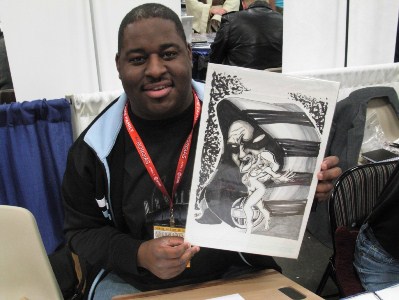
Ian D. Walker with Cloak and Dagger sketch, at WonderCon 2011

If you check out Ian Walker’s website (not-so-subtle hint) and you like his work, shoot him a line and order up a commission. I’m sure Ian would be delighted to hook you up with some funk of your own. (You can tell him your Uncle Swan sent you.)