Archive for the ‘Hero of the Day’ category

The Freak abides

November 19, 2009

Believe it or don’t, I was completely surprised by today’s announcement that the Giants’ Tim “The Freak” Lincecum won his second consecutive Cy Young Award as the National League’s best pitcher in 2009.

If I’d been voting, I’d have voted — as did the San Francisco Chronicle‘s respected baseball beat writer, Henry Schulman — for Chris Carpenter of the St. Louis Cardinals.

Don’t misunderstand — I loves me some Timmy, in a platonic, athletic-appreciation sort of way. I do believe that he’s currently the premier pitcher in the NL, if not in all of baseball.

Carpenter, however, had the better season. Which is, in my opinion, what the Cy Young should recognize.

There’s no question that Lincecum far outstrips Carpenter in terms of raw power. Timmy’s 261 strikeouts to Carpenter’s 144 tell that story. Carpenter, however, isn’t a strikeout pitcher. He’s a do-anything-to-get-batters-out pitcher. It’s not as sexy, but in baseball terms, it’s just as effective.

With almost identical offensive support and WHIP (walks and hits per inning pitched) scores, Carpenter won two more games than Lincecum (17 vs. 15), lost three fewer (4 vs. 7), and surrendered almost a quarter-run less per nine innings (2.24 vs. 2.48). More significantly, Carpenter did the majority of his damage in the second half of the season, as the Cardinals were charging toward a division title. As Schulman writes:

The 34-year-old right-hander went 10-1 with a 2.06 ERA in 15 starts for a team that ran away with the National League Central. To me, that defines dominance.

To me too, Henry.

By comparison, Timmy went 5-5, 2.67 down the stretch. Not awful, but not exactly awe-inspiring, either.

I was fortunate to see Lincecum pitch in person twice this season — on June 12 against the Oakland A’s, and again on August 10 against the Cincinnati Reds. In the earlier game, Tim was dominant to the point of near-unhittability, pitching his second career shutout. In the late-season outing, he pitched decently, but looked tired and had measurably less oomph on his normally overpowering fastball.

Carpenter seemed to get stronger as the season wore on — all the more remarkable given that he pulled a shoulder muscle and sat out five weeks early.

So, if I’d had a vote, I’d have had to throw it Carpenter’s way.

All of the above being true, as a Giants fan  — and as a Lincecum fan (and I rarely find myself rooting for individual athletes in team sports) — I’m thrilled that the majority of the Cy Young balloteers didn’t see it my way. Lincecum is a better pitcher than Carpenter overall, and if that’s how you roll the Cy, rolling it in Timmy’s direction is the right call. Without doubt, if I had to win one game for all the marbles, Lincecum is the guy I want on the hill chucking the pill.

And let’s be real. If he avoids injury, Lincecum will likely plant a few more Cy Youngs in his trophy case before his career is over. Don’t forget, 2009 was only his second full season in the major leagues. He’s already won the Cy in both of them.

That’s a record that no pitcher in baseball history can touch.

What’s Up With That? #83: Cap’n Jack bests Cap’n Swan… again

November 18, 2009

For the umpteenth consecutive year, the editorial staff of People Magazine has seen fit to deny me my rightful title of Sexiest Man Alive.

Instead, they picked Johnny Depp again.

This seems a rather pointless exercise. Most of the women I know already think Johnny Depp is, if not the Sexiest Man Alive, at least somewhere in the top ten. The same goes for George Clooney and Brad Pitt, who are the other two gents who’ve double-dipped People‘s loftiest honor.

Why not tell the world something they don’t yet know, People?

After all, I too can talk like a pirate.

Sigh. Maybe next year.

World Series Wonderboy

November 12, 2009

Congratulations to 21-year-old Joe Cada, who earlier this week became the youngest player ever to win the World Series of Poker Main Event.

Cada outdueled Darvin Moon, a logger from Maryland, to take down the most prestigious prize in poker, the World Champion’s gold bracelet. On the ultimate hand, Cada’s pocket nines bested Moon’s Queen-Jack holding, as neither hand improved when the five community cards hit the table. Ironically, Cada had indicated in an online interview that of the nine members of the Main Event’s final table, Moon was the player with whom he was the least familiar going into this week’s final table.

As fruit of his efforts, the youngster from Shelby Township, Michigan scored $8,547,042 and the envy of millions of poker players worldwide. Moon’s second-place loot totaled a none-too-shabby $5,182,928.

For the second consecutive year, the WSOP Main Event suspended play in July after its field of more than 6,400 players had been winnowed to a nine-seat final table. The so-called “November Nine” had an additional four months to brush up their hold-’em chops before reconvening at the Rio Hotel in Las Vegas for this week’s endgame.

The biggest name at the final table, poker superstar Phil Ivey, finished in seventh place. Jeff Shulman, the publisher of Cardplayer Magazine and a veteran of the 2000 WSOP Main Event final table, landed in fifth place. Shulman finished seventh in 2000.

Thanks to young Mr. Cada and the rest of the Nine for an excellent end to the 40th WSOP.

Hug a veteran today

November 11, 2009

…or, at the very least, shake a veteran’s hand, if you’re not down with the whole hugging thing.

And if you yourself have served with honor in the United States Armed Forces?

Pat Patriot, pencils and inks by comics artist Greg LaRocque

Pat Patriot loves you.

Not unique

October 29, 2009

I would have written about this before now, except that I didn’t know about it until today, when a member of an online forum that I frequent brought it to my attention.

A couple of weeks ago, I surrendered a distinction that I’ve held all by my lonesome for the past 21 years.

Since June 1988 — actually since March of that year, but the feat wasn’t official until June, when the programs aired — I have been the only African-American five-game champion in the history of Jeopardy! (If you’re arriving late to the party, you can read about my career as a game show trivia wizard by following the link. And yes, you nitpicker, technically I’m “biracial” — but if it’s good enough for the President of these United States, it’s absolutely good enough for me.)

As of two weeks ago Friday, a gentleman from Plano, Texas named Terry Linwood muscled his way into my formerly one-man fraternity.

Now, don’t get me wrong. I’m as thrilled as all get-out for Terry, who’s a fantastic Jeopardy! player. (I saw a couple of Terry’s games, but not his game five — which he won — or his game six — which he lost — and thus I wasn’t aware of his accomplishment.)

Still, I’m sure you’ll excuse me for feeling just a tiny bit less… remarkable today.

Had you asked me 21 years ago whether I thought my dubious accomplishment would stand the test of more than two decades’ time, I’d have imagined you daft. I mean, who’d have thought Jeopardy! would even be on the air after 26 seasons? And, given the number of contestants who grace the Sony Pictures Studios stage every year, you’d have supposed that a couple of dozen people, maybe, would have smashed in the door to my solitary club by now.

It’s a funny old world, sometimes.

Now I know how Snoopy felt in this classic Peanuts strip:

Peanuts

Congratulations to Terry Linwood on becoming Jeopardy!‘s latest five-time champ. I’ll be pulling for him in next year’s Tournament of Champions.

If he does well, I’ll even teach him the secret handshake.

The Not Having Been Discovered Yet List

October 12, 2009

I hope you’re enjoying your Columbus Day — or, as I prefer to call it, Not Having Been Discovered Yet Day (an homage to the late, great comic genius, Flip Wilson).

Sure, Christopher Columbus was directly responsible for the deaths of hundreds of thousands — some historians suggest millions — of indigenous North Americans. And yes, he introduced the slave trade to the New World. And despite what you may have heard, he wasn’t the first European to make landfall or establish a colony in the Western Hemisphere — hello, Leif Ericson — nor to prove that the Earth was round (the shape of the Earth was understood from ancient times; the Biblical book of Isaiah, written around 700 B.C., described “the circle of the Earth”).

But Crazy Chris had a terrific press agent: namely, storyteller Washington Irving. Irving’s 1828 fictionalized biography, The Life and Voyages of Christopher Columbus, popularized most of the commonly accepted legend about the explorer.

Which is the main reason there’s a Columbus Day.

Listing all of the various and sundry items named for the self-styled Admiral of the Ocean Sea would take us until… well… next Columbus Day. So instead, I’ve selected my seven absolute favorite Columbus name-checks.

7. Columbus Salame. One of the Bay Area’s finest producers of tasty meat products. I lunched on sandwiches made from Columbus deli ham just yesterday. Delicious.

6. The District of Columbia. This will come a shock to fans of filmmaker Alex Proyas, but the abbreviation at the end of Washington, D.C. does not stand for Dark City. I lived in our nation’s capital for several months when I was young — my father was stationed at nearby Andrews Air Force Base.

5. Columbus, Ohio. My wife used to work for Nationwide Insurance, which is based there. Thanks for all the paychecks.

4. The Columbia River. On a speaking trip to Eugene, Oregon some years back, I was treated to a lovely dinner in a restaurant overlooking the river. Roll, Columbia.

3. Motion picture director Chris Columbus. The only one of Columbus’s films that I truly enjoy is his first, Adventures in Babysitting, but that one is so choice that I’m willing to overlook abject junk like Home Alone and Mrs. Doubtfire. “Nobody leaves this place without singing the blues.”

2. The World’s Columbian Exposition of 1893, sometimes referred to as the Chicago World’s Fair. Author Erik Larson wrote an excellent nonfiction book, The Devil in the White City, about the development of the Exposition and the concurrent activities of serial killer H.H. Holmes. If you haven’t read Larson’s tome, I highly recommend it.

1. Lt. Columbo. I always wondered whether Peter Falk’s disheveled detective was a descendant of the Italian-born explorer (whose name in his native tongue would be pronounced Christoforo Columbo). “Ah, pardon me, ma’am… just one more thing… do you mind if I steal your continent?”

Swayze goes Swayze

September 15, 2009

Even the legendary Dalton loses a fight once in a while.

The air grew a bit chill around me when I fired up the laptop last evening and read the news that Patrick Swayze had passed away at age 57. We all knew the moment was coming — we probably knew it more than a year and a half ago, when Swayze revealed that he had been diagnosed with pancreatic cancer — but while not unexpected, it was nevertheless sad.

Swayze went down battling. In the midst of life circumstances that would have cause many of us to cocoon at home to await the inevitable, Swayze completed an entire season of a physically demanding TV series. He appeared in public when his health permitted. He gave interviews. He talked openly about his fight, and his determination to win.

You think Chuck Norris is tough? Patrick Swayze smacked Chuck Norris in the mouth and stole his lunch money every day for 20 months.

If Swayze had made only three films — Road House, Dirty Dancing, and Ghost — he would have had a career that ninety percent of Hollywood would have gladly sacrificed their own pancreases (pancreii?) for. Most actors would kill for a single role that defined them as pop-cultural icons. Swayze had three.

Road House may be the most frequently broadcast movie in the history of basic cable. (Is there a night during the week when you can’t find it somewhere on the dial?) Dirty Dancing garnered Swayze an enduring image, an endlessly repeated tagline — “Nobody puts Baby in a corner!” — and even a hit single… although the less said about “She’s Like the Wind,” the better. Ghost made Swayze’s name a hip-hop catchphrase. I doubt he collected a royalty every time some rapper said, “I’m Swayze,” but he should have.

Of course, Swayze made a ton of other films as well, in addition to his television work. But he’ll be remembered for this immortal trio.

Personally, I think Road House is one of cinema’s great disposable classics. It’s beyond ridiculous (come on… a heroic bouncer with a ludicrous hairdo? that only worked for Mr. T.), horrifically acted (from the expression-challenged Kelly Lynch to the scenery-gobbling Ben Gazzara to the host of bit players embodying every white trash stereotype known to man), and as predictable as tomorrow’s sunrise, but doggoned if it isn’t entertaining. How can a movie that features Jeff Healey’s incendiary blues guitar, a singing spotlight for the always delightful Kathleen Wilhoite, Sam Elliott being Sam Elliott, and a shirtless Swayze ripping out a man’s trachea with his bare hands not be entertaining?

I always liked the fact that Swayze — a serious and thoughtful man, by all accounts — maintained a sense of humor about himself. He famously poked fun at his own image in a Saturday Night Live sketch with Chris Farley, in which the unlikely duo played Chippendales wannabes. Swayze even popped up in an uncredited cameo in the dreadful Dirty Dancing sequel, Havana Nights.

Like the great Dalton, Patrick Swayze kept being nice until it was time to not be nice.

Unfortunately, the bad guys sometimes win.

The lion sleeps tonight

August 26, 2009

The first vote I ever cast for President in a national election, I cast for Senator Edward Kennedy.

The year was 1980. As much as it pained me — because I thought he was a decent guy who simply got in way over his head — I couldn’t bring myself to vote to reelect President Carter. You know darn well I wasn’t voting for the cowboy from Death Valley Days. As for John Anderson… you’re saying right now, “Who?” To which I can only reply, “Exactly.”

So I wrote in a vote for Ted.

It’s the only time I’ve ever exercised the write-in option in any election, for any office, ever. It might be the only time I ever exercise it. But I still believe that, in that particular election, it was the right move.

Ted Kennedy did more in service to this country during his storied tenure in the Senate than any dozen of his colleagues — of either party, or of both parties — that you’d care to name. I’m sorry that he didn’t live to see the health care reform for which he fought so hard in the waning days of his life. But I’m glad that he lived to see Barack Obama elected President.

Was Ted Kennedy a perfect man? He was not. (For the record, neither am I.) I don’t even know whether he was a good man, because I didn’t know him personally. But he was a great Senator. I remain convinced that he would have made a great President.

I’m proud that, the one time when the opportunity presented itself, I voted for him.

Thanks for everything, Senator.

Moonwalkers, part two

July 21, 2009

As we commemorate the 40th anniversary of the Apollo 11 lunar landing, we continue with the second half of that most exclusive of clubs: men who have walked on the moon. (You can read about the first six moonwalkers here.)
BlueMarble

7. David R. Scott, mission commander, Apollo 15. Reached the moon July 31, 1971.

Although Dave Scott finished fifth in his class at West Point, he joined the Air Force instead of the Army in order to pursue his dream of becoming a jet pilot. By the time he took command of Apollo 15, Scott was already a space veteran — he had accompanied Neil Armstrong on the glitch-plagued Gemini 8 mission, and had become the last American to orbit the Earth solo as the command module pilot on Apollo 9. He became the first member of Astronaut Group 3 to command a mission, and the first astronaut to lead a so-called “J Mission,” with an extended stay on the lunar surface (Scott and teammate Jim Irwin spent nearly three full days on the moon) and use of the Lunar Rover excursion vehicle.

Beyond the moon: Scott’s NASA career came to an abrupt end due to what came to be known as the Apollo 15 postage stamp incident. Scott, with the knowledge of his crew, had smuggled 398 commemorative stamp covers on his trip to the moon, and later sold 100 of the covers to Hermann Sieger, a collectibles dealer from Germany. The action was neither illegal or forbidden by NASA protocol, but when certain members of Congress got wind of the back-door business deal, political furor and Capitol Hill hearings ensued. As a result, neither Scott nor his two crewmates ever flew another space mission. (The 100 “Sieger covers” are now valued at between $15,000 and $18,000 each.) Today, Scott lives in the Los Angeles area and is a frequent consultant on film and television projects. He is 77 years old.

8. James B. Irwin, lunar module pilot, Apollo 15. Reached the moon July 31, 1971.

Like Dave Scott, Jim Irwin graduated from another service academy — in Irwin’s case, the U.S. Naval Academy — before joining the Air Force. Apollo 15 was Irwin’s first and only spaceflight, though he played key backup roles in training for two prior Apollo missions. The scientific nature of this particular mission required Irwin and Scott to undergo extensive training in geology — training that led to their discovery and identification of the so-called Genesis Rock, a chunk of lunar material believed to date from the formation of the moon.

Beyond the moon: Although Irwin never flew another NASA mission because of the aforementioned stamp incident, it’s likely that he would have been decertified for space in any event. He experienced cardiac symptoms during his and Scott’s time on the moon, and suffered a heart attack a few months after their return to Earth. Resigning from NASA in 1972, Irwin began a new career in ministry. He later led several unsuccessful expeditions to Turkey in search of the wreckage of Noah’s ark. Jim Irwin succumbed to a heart attack at his Colorado home in 1991 — the first of the moonwalkers to die, as well as the youngest. He was 61.

9. John W. Young, mission commander, Apollo 16. Reached the moon April 21, 1972.

Navy test pilot John Young was one of the graybeards of the Apollo program. He had already been into space three times before his trip to the moon — as pilot alongside Mercury veteran Gus Grissom on the first manned Gemini mission (Gemini 3); as command pilot aboard Gemini 10; and as command module pilot on Apollo 10, the second and final lunar orbital mission before Apollo 11‘s historic landing. During the latter mission, Young became the first man to orbit the moon solo, as his colleagues tested the lunar module. Commanding Apollo 16 earned Young an additional distinction as the first individual to make a return trip to lunar orbit.

Beyond the moon: John Young may well hold the title of NASA’s busiest astronaut. He continued with the  program into the Space Shuttle era — the only Mercury veteran to do so — and was at the helm for the Shuttle’s first space mission as well as one later flight. The first individual to make six journeys into space, Young is also the only person to have piloted four different types of spacecraft — a Gemini capsule, both Apollo vehicles (the command module and the lunar module), and the Shuttle. He retired from NASA in 2004 after 42 years in the space program. Young still lives in Houston, and is 78 years old.

10. Charles M. Duke, Jr., lunar module pilot, Apollo 16. Reached the moon April 21, 1972.

A Naval Academy graduate and Air Force pilot, Charlie Duke was already familiar to followers of the space program before his rookie flight on Apollo 16. It was Duke’s Carolina drawl at Mission Control that viewers heard speaking with Armstrong and Aldrin during the Apollo 11 moon landing. (Astronauts were frequently assigned capsule communicator, or “CAPCOM,” duties for flights on which they were not the designated backup crew.) Duke also had figured in the run-up to the ill-fated Apollo 13 mission. As Apollo 13‘s backup lunar module pilot, Duke’s bout of rubella resulted in fellow astronaut Ken Mattingly — who had not previously been exposed to the disease — being removed from the mission and replaced with Jack Swigert. Mattingly then joined Duke and Young as Apollo 16‘s command module pilot.

Beyond the moon: Duke retired from NASA in 1975 and became a successful entrepreneur. He is also active as a speaker and consultant. At age 73, Duke is the youngest member of the moonwalkers’ fraternity.

11. Eugene A. Cernan, mission commander, Apollo 17. Reached the moon December 11, 1972.

Gene Cernan, the son of immigrants from eastern Europe, came to NASA as a Naval aviator and aeronautical engineer. His first space mission was the star-crossed Gemini 9, where Cernan and Thomas Stafford moved from backup to primary crew after the astronauts originally assigned were killed in a plane crash. On Apollo 10, Cernan served as lunar module pilot (with Stafford as mission commander), making him the only astronaut to have descended to the moon in a lunar module on two separate occasions — albeit without landing on the initial trip.

Although the 11th person to walk on the moon, Cernan also holds the current distinction of having been the last person to have accomplished the feat, as the second man to reboard the lunar module after Apollo 17‘s final EVA. Cernan spoke the final words to date by a human being standing on the lunar surface:

As we leave the moon at Taurus-Littrow, we leave as we came, and God willing, as we shall return, with peace and hope for all mankind. As I take these last steps from the surface for some time to come, I’d just like to record that America’s challenge of today has forged man’s destiny of tomorrow. God speed the crew of Apollo 17.

Beyond the moon: Gene Cernan has spent most of his post-NASA career as a businessman and as a speaker on space-related topics. For a number of years, he was the regular spaceflight commentator for ABC News. He is the author of the autobiography Last Man on the Moon, which chronicles his astronaut years. In January of this year, Cernan appeared here in Santa Rosa at the Charles M. Schulz Museum for the opening of a space-themed Peanuts exhibit. Cernan is now 75 years old.

12. Harrison H. Schmitt, lunar module pilot, Apollo 17. Reached the moon December 11, 1972.

Harrison “Jack” Schmitt’s arrival on the moon was preceded by controversy. Originally, astronaut Joseph Engle had been scheduled as Apollo 17‘s lunar module pilot. When the final three Apollo missions were canceled, however, the scientific community that had so enthusiastically supported NASA insisted that a scientist — as opposed to a military officer (although Neil Armstrong had retired from the Navy before joining NASA) — should be part of the final moon mission of the era. Thus, Engle was replaced by Schmitt, a geologist with degrees from Caltech and Harvard — the only geological expert in the astronaut ranks.

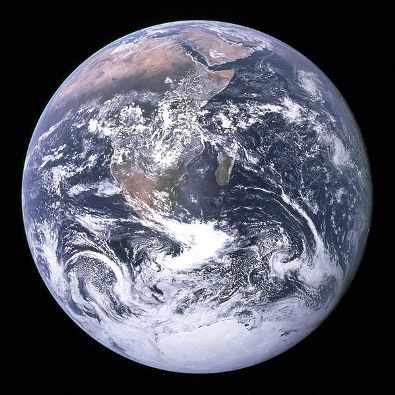
Although Gene Cernan was vocal in his disapproval of Engle’s removal from his team, by all accounts he and Schmitt worked well together during their lunar excursion. During Apollo 17‘s outbound voyage, Schmitt snapped one of the most famous photographs ever taken — the shot of Earth from space usually referred to as “The Big Blue Marble.”

Beyond the moon: Schmitt left NASA in 1975 to run for the U.S. Senate. He served a single term as a Republican from New Mexico. After being defeated for reelection, Schmitt focused on consulting and education. Until last year, he chaired the NASA Advisory Council, a group of scientists, policymakers, and former astronauts charged with providing technical guidance to the NASA Administrator. Schmitt still lives in his native New Mexico, and is 74 years old.

And that’s it.

To this date, these are the only 12 people who have stood on the surface of the moon. No new member has joined their elite fraternity in almost 37 years.

Nine of the moonwalkers survive. Given that all nine are in their 70s, that status will likely not hold for long. It’s my sincere hope that at least some of them live long enough to see others do what they alone have done.

What a shame it would be for the human race if the moonwalkers — the representatives of our loftiest purpose, our greatest collective endeavor, our highest material achievement — became extinct.

As a citizen, I challenge President Obama, the members of Congress, and the administrators of NASA:

Ignore the naysayers.

Let’s go back to the moon.

And on to Mars.

Moonwalkers, part one

July 20, 2009

No, this is not a Michael Jackson post.

Apollo11crew

If you were five years or older on this date 40 years ago, you remember.

You remember the tingle of excitement. You remember the wonder. You remember the grainy images of two men in bulky white pressure suits and their static-charged banter with their handlers a quarter of a million miles away. And you remember the words:

That’s one small step for a man… one giant leap for mankind.

How could you not remember?

For the first time, human beings had set foot on the surface of another world.

Had you told me then, a third-grader basking in the glow of a cathode ray tube in a military-base townhouse in central Maine, that four decades later, the exclusive club opened on that amazing day by Neil Armstrong and Buzz Aldrin would have a grand total of twelve members, I would not have believed you.

I find it nearly impossible to believe even now.

And yet, it’s true. Two generations after humans first stood on the moon, only a dozen of our kind have ever done so. None have accomplished the feat since 1972 — 37 years ago.

I think that’s one of our greatest failures. As a nation, and as a species. We gave up on the incredible, and began settling for the mundane.

In an effort to inspire ourselves, let’s reflect for a moment on those bold pioneers who first touched the stars.

1. Neil A. Armstrong, mission commander, Apollo 11. Reached the moon July 20, 1969.

A former U.S. Navy aviator and experienced test pilot, Armstrong was one of only two civilians selected in 1962 for NASA’s second astronaut group, dubbed “the New Nine.” He commanded the Gemini 8 mission, and had been forced to abort that flight early due to a malfunctioning attitude thruster. Armstrong was chosen to lead the first lunar landing because he was considered NASA’s most capable pilot in critical emergency situations.

Beyond the moon: Armstrong left NASA shortly after Apollo 11. He has worked mostly as an engineering consultant and member of several corporate boards of directors. Armstrong served on the panel that investigated the explosion that prematurely terminated the Apollo 13 mission, and was vice-chairman of the Rogers Commission, which investigated the destruction of Space Shuttle Challenger in 1986. He is now 78 years old.

2. Edwin E. (Buzz) Aldrin, Jr., lunar module pilot, Apollo 11. Reached the moon July 20, 1969.

The MIT-educated Aldrin was a U.S. Air Force jet fighter and test pilot before joining NASA’s third astronaut group. His first spaceflight came as the pilot of Gemini 12, during which he undertook three EVAs (extra-vehicular activities, or “spacewalks”) totaling 5.5 hours. Aldrin’s experience working outside the spacecraft led to his selection for the Apollo 11 team. Aldrin’s “Contact light… okay… engine stop” as Apollo 11‘s lunar module Eagle came to rest were the first words ever spoken from the moon’s surface.

Beyond the moon: Aldrin’s early post-NASA years were marked by struggles with alcoholism and depression. He wrote about these difficulties in his 1973 autobiography Return to Earth, and more recently in its follow-up, Magnificent Desolation, published earlier this year. Aldrin has been and remains an active advocate for space exploration, and speaks extensively on the subject. The Disney/Pixar animated character Buzz Lightyear is named after Aldrin.

3. Charles M. (Pete) Conrad, Jr., mission commander, Apollo 12. Reached the moon November 19, 1969.

Pete Conrad overcame dyslexia to excel as a U.S. Navy aviator and flight instructor. At the time of his moon flight, Conrad was one of NASA’s most experienced astronauts, making his third trip into space aboard Apollo 12. Previously, Conrad had served as pilot on Gemini 5, and as commander aboard Gemini 11. Among the shortest members of the astronaut corps, the iconoclastic Conrad famously wisecracked about his size as he took his first step from the lunar module: “Whoopee! Man, that may have been a small one for Neil, but that’s a long one for me.”

Beyond the moon: Conrad was scheduled to return to the moon as commander of what would have been the Apollo 20 mission. The cancellation of the Apollo program found him instead as the initial commander of America’s first manned space station, Skylab. Conrad’s Skylab 2 crew (the Skylab 1 mission designation referred to the unmanned launch of the space station itself; the first launch of astronauts to the station was thus Skylab 2) set a space endurance record of 28 days. Leaving NASA, Conrad worked for McDonnell Douglas for 20 years. In 1996, he led a team that set the record for circumnavigating the globe in a Learjet. Conrad was killed in a motorcycle accident near his southern California home in 1999, at the age of 69.

4. Alan L. Bean, lunar module pilot, Apollo 12. Reached the moon November 19, 1969.

A member of NASA’s third astronaut group, Alan Bean was a former student of Pete Conrad’s at the Naval Flight Test School. The death of another astronaut in a motor vehicle accident opened an opportunity for Conrad to request Bean for his Apollo 12 crew.

Beyond the moon: Bean returned to space in 1973 as commander of the second Skylab crew, designated Skylab 3. After this record-setting mission, Bean served for several years as the civilian director of Astronaut Candidate Operations and Training. These days, he’s an accomplished artist who specializes in painting lunar landscapes. Bean also recently co-wrote, with fellow astronauts Owen Garriott and Joseph Kerwin, a book about the Skylab missions entitled Homesteading Space. Alan Bean lives is Houston and is 77.

5. Alan B. Shepard, Jr., mission commander, Apollo 14. Reached the moon February 5, 1971.

America’s first man in space became its oldest man on the moon when 47-year-old Mercury veteran Alan Shepard made his long-delayed return to active duty as commander of Apollo 14. Shepard had been deemed unfit for space for several years following his initial flight due to Ménière’s disease, an inner ear disorder. He spent the intervening years as Chief of the Astronaut Office until his condition was surgically corrected.

Ironically, Shepard replaced another member of the Mercury Seven, L. Gordon “Gordo” Cooper, on the team when Cooper was bumped due to his lackadaisical training habits and adversarial relationship with the NASA brass. Avid golfer Shepard made history in another way during his moon expedition, when he volleyed off a couple of golf shots into the lunar night with a jury-rigged six-iron (he attached the head of a Wilson club to the handle of a NASA-issued shovel).

Beyond the moon: Shepard resumed his duties as chief astronaut after Apollo 14. He retired in 1974 and became a successful entrepreneur. Moon Shot, a book Shepard coauthored with journalists Jay Barbree and Howard Benedict, formed the basis of a TV miniseries in 1994. Shepard died from leukemia in 1998, at the age of 74.

6. Edgar D. Mitchell, lunar module pilot, Apollo 14. Reached the moon February 5, 1971.

Ed Mitchell became a moonwalker on his one and only spaceflight. A member of NASA’s fifth astronaut class in 1966, the former Naval research pilot and flight instructor held a doctorate in aeronautics from what is now Carnegie Mellon University.

Beyond the moon: Mitchell is probably best known today for his widely publicized views on the paranormal. He conducted ESP experiments during the Apollo 14 mission, and believes that UFOs may actually be alien spacecraft. He has stated in interviews that the infamous Roswell, New Mexico event in 1947 was the crash of one such craft, and that NASA, the Pentagon, and other U.S. government agencies are involved in shielding the general public from the truth about evidence of visitors from other planets. Mitchell, now age 78, lives in West Palm Beach, Florida.

These are the first six. We’ll take a look at the other half of the Moonwalkers Club in tomorrow’s post.